Our Mission:

Our Mission: To enable individuals and communities to take an active part in the cultivation of systems that provide the highest quality fruits, vegetables, herbs and other yields, in a way that benefits themselves, cares for the land and environment, and provides a surplus to use, share and reinvest into the system.
Showing posts with label Food Forest. Show all posts

Wednesday, August 14, 2024

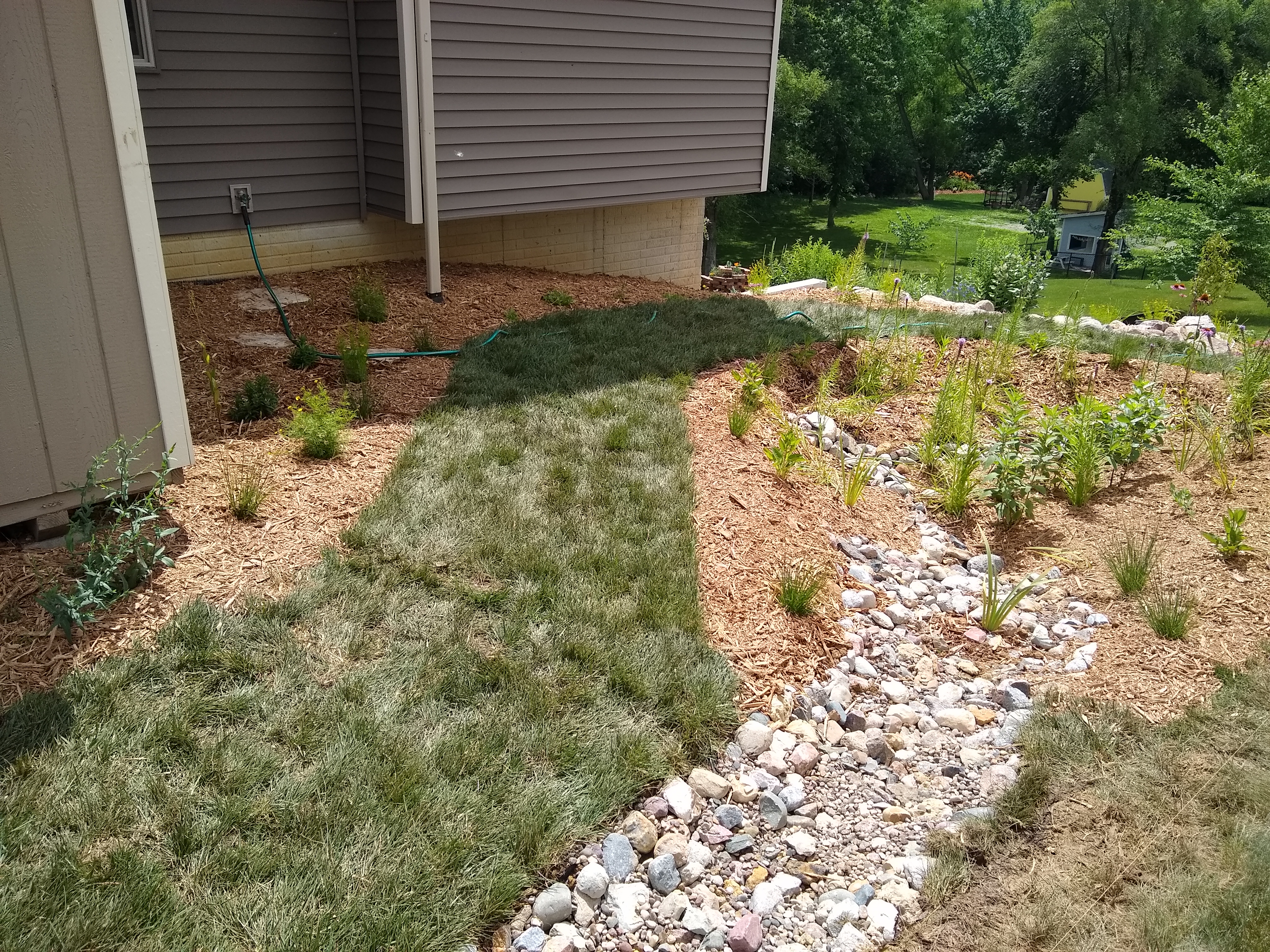
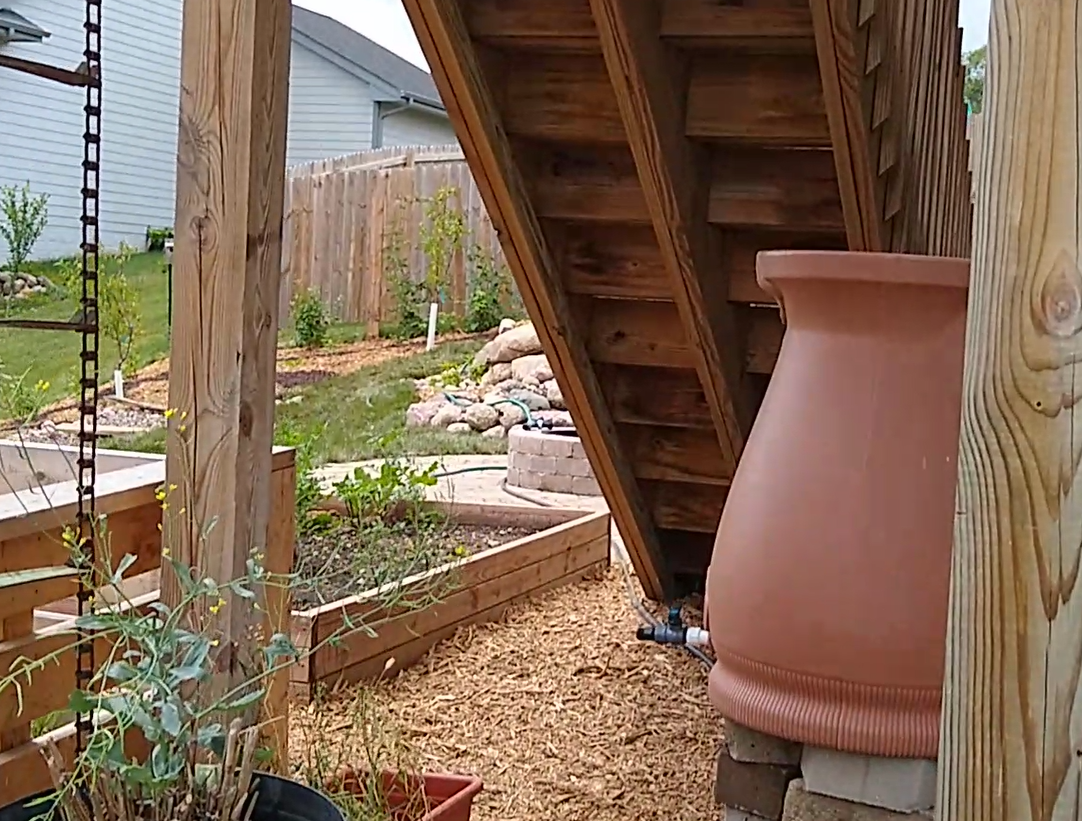
Back-to-Back Edible Rain Garden Installs

Earlier this season we had been joking that even though we were busy, we hadn't done a single rain garden installation yet.  We had done some revamping of a couple older ones, an edible landscape for a commercial project, several large native plantings and a homestead orchard.

Little did we know that we would do two back-to-back rain garden installs, that also wanted to include as many food producing plants as possible!

This first project in Clive was the first to use their newly retooled cost share program (link).


The other was in Des Moines, and after a little time to think it through, they decided to go for it!


More details on these projects are coming up, but I was excited to share the combination of stormwater, natives and edible plants and trees!


Tuesday, February 20, 2024

Tap Those Trees - with Video

Each year at the end of winter and beginning of spring, there are a few weeks of magic that happens.  Tree sap starts to flow, bringing life from the roots back into the branches. Farmers across the northern US and Canada collect sap from their maple trees as they have for over two hundred years.  

The sap is collected and usually taken to their "Sugar Shack." There, this barely sweet, clear sap is boiled down using time-honored methods passed down from generation to generation to produce the sweet, dark maple syrup we use on pancakes, waffles and more.

You can also take part in this historical tradition right in your own backyard (or a friendly neighbors)!


This week's forecast looks great!

Sugar maples are best, with typically higher sugar content in the sap, but I had a garden design customer tell me he got over 40 gallons from a large silver maple in his yard!  I think our tree is probably an Autumn Blaze hybrid maple from the looks of the fall foliage and how common they are in the suburbs.

Our Maple Tapping Display at the
2016 Home & Outdoor Living Show


You can also tap Birch, Black Walnut and I've even heard of Butternut trees for uniquely flavored syrup.

Buy your Spiles, or Tree Taps, just like mine - HERE

These Hook Spouts are especially designed to hold pails with holes smaller than ¾ inch. The hook slides on behind the washer.


This video from our backyard tree demonstrates a simple "how-to" tapping method for you-

From the Northern Midwest to New England and into Canada, the sap is boiled down into Maple Syrup.  This is often done in large pans over an open flame outside, as boiling sap into syrup produces a lot of steam.  And it takes a lot of fuel.  Sap is continuously added as the water is boiled off, carefully making sure it doesn't boil over or burn the pan.  It typically takes around 40 gallons of sap to make one gallon of syrup.

If you have access to enough trees and want to try making some syrup yourself, here is a great guide from the University of Maine Extension Service.

How to Tap Maple Trees and Make Maple Syrup (link) 


We just drink the sap since we don't have many trees and its high in minerals, other nutrients, enzymes, antioxidants, and more—an incredible, all-natural beverage with less than 2% sugar!

You can learn more about Drinking Maple 

(and other sap) at Chelsea Green (link)


If you want to experience it in person the Indian Creek Nature Center near Cedar Rapids is having a Maple Syrup Festival on March 23 & 24 this year.

41st Annual Maple Syrup Festival (link)


Enjoy the tastes of the season!

Thursday, December 14, 2023

Abundant Design Holiday Gifts

This year you might considering an alternative gift.  We'd like to offer some ideas and options that are earth-friendly and fun!

These gifts will be available for pickup mid to late spring, but you can get a printable certificate for gifting. 


Pollinator Plug 6-Pack   $30

6 pack of native plugs, wildflowers only  Order a 6-Pack

- 6 larger potted plants for $60


Pocket Prairie Starter   $45

15 Native prairie plugs, include wildflowers and grasses for diversity.  These plants are suitable for a 4' x 8' or similar sized planting area and include shorter species for the front and taller growers for the back.

  Order a Pocket Prairie  

- 15 larger potted plants $150


Tree Guild To-Go   $50

perennial & productive 

Newly grafted fruit tree along with companion plants; 2 chive plugs, 2 white clover plugs/seed packet, comfrey root cutting

  Order a Tree Guild To-Go

- Upgrade to 4-6' potted tree +$50

- Add strawberries, 5 large crowns +$5


-Newly grafted fruit tree only for $25


These Holiday Deals will go through the end of the year.  Installation is also available for next season.

Sometimes the butterflies, bees and hummingbirds can hardly wait for our plants to get in the ground!

🦋 Butterflies showing some love 💕


Wednesday, July 5, 2023

Keeping Rootstocks in Check

Suckers growing from the rootstock

Grafted fruit trees are wonderful additions to the landscape.

Grafting lets us know which variety of fruit we are growing, assuring we get our favorite flavors and other qualities.  This top part is known as the Scion wood and is grafted onto a known rootstock.

The Rootstock is the part of the tree that will grow in the ground, and also chosen for its characteristics.  Rootstocks can be seedling grown for economics but are typically cloned with reproducibly known qualities.  These may be chosen for size, disease resistance or performance in a specific soil type.

While trees are young, "root suckers" and other branches on aggressive rootstocks have an easier time growing as the graft scar takes some time to heal completely.  This reduces nutrient and water transfer, hindering the scion's ability to grow until it heals completely.  These branches and suckers can sometimes grow rapidly and overtake the slower grafted portion.  If left unchecked this can eventually cause the grafted part to atrophy and die, losing your chosen variety.

In the video we'll visit the Food Forest at Drake University to demonstrate sucker pruning on a young grafted American Persimmon tree.

Branching and suckering of the rootstock is one way to lose your grafted variety from trees and you will be left with lesser quality fruit, if any fruit at all.  Removing these vigorous suckers is necessary for the long-term health and productivity of the tree.


Tuesday, February 7, 2023

Epic Permaculture Backyard Retreat p2

Not many projects bring in so many elements onto one property.  This was an ambitious project and one that checks a lot of boxes by integrating stormwater management and permaculture guilds with traditional landscaping elements!

Permaculture design provides a wonderful toolbox to integrate all of these elements into one cohesive design.

Part 2 of this project summary will focus on the productive parts of the backyard.

From the deck you can see many of the elements in the backyard-

    • Fruit guilds 
      • trees and berry bushes with productive and/or beneficial perennial plants
    • Annual garden, compost bin & herb spiral
      • rain barrel (for the best water) right by the garden
    • Patio & firepit
    • Waterfall
Overlooking this new productive and relaxing backyard space

The site had a very challenging slope that was difficult and dangerous to mow, with poor soil quality, erosion and soggy areas.  We finished this amazing residential project last season.

If you missed Part 1, read that here

Enhanced rain garden and dry stream bed.

This water feature is a feast for all the senses and could provide a drink for pollinators and beneficial insects like dragonflies.  The surrounding prairie planting provides habitat and attracts pollinating insects necessary for fruit and vegetable production.

Pondless waterfall with prairie planting behind

Moving down the slope, the stream separates the lawn from the peach and bramble guild.  Bee balm and thyme are companion planting powerhouses; they attract pollinators, are a beneficial part of foraging bees' diet and have antimicrobial properties that may help prevent diseases in vulnerable fruit trees.  The yarrow in the understory also attracts predatory insects, like lacewings and syrphid flies, that keep pest species in check.

Peach trees with black berries, raspberries and other
companion plantings.

Constructing the herb spiral-
 also high on the customer wish list


Herb spiral with historical salvaged bricks, rain garden
overflow stream in the background.

Herb spirals are often found in permaculture gardens and something the customer really wanted to include.  A spiral pattern is one that repeats in nature and depending on the herb spiral's size can induce microclimates that can be targeted with herbs that appreciate them.  Herbs are generally quite resilient and do well in these raised systems which can be too dry for typical vegetables.  We positioned this one near the edge of the lawn for easy access and near the annual vegetable garden.

Looking across the raised keyhole garden beds
as the sod was being finished.  With the amount of
earth sculpting, sod was needed for the small lawn.


Before - Garden space
The vegetable garden was originally located where the new patio is.  It was moved to open up the center of the yard while still keep it accessible.  It also allowed us to move all of the gardening space together.  The "keyhole garden bed" was rebuilt trying to salvage as many plants as possible.


Keyhole garden beds with composter behind.
A rain barrel is on a stand behind the stairs.

The composters were moved from the shed/rain garden area here where garden and kitchen waste are easily added; and finished compost will be handy to amend the soil in the garden.  


We also moved a rain barrel from the other side so that rainwater from the downspout is captured under the deck right near the garden for use.

Native pollinator beds were already established, we just added the 
planting space on the hardest to mow areas - between the tree guilds.

Apple guild view from below

The apple guild includes rhubarb, gooseberries and currants.  Strawberries were used as a productive ground cover, along with pockets of clover for nitrogen fixation.  The tree spacing allows a good deal of sun through for fruit production but does provide shade in the afternoons which strawberries appreciate.  The swale on contour captures runoff from above hydrating the plants below.  The access paths (dark mulch) also follow the contour to prevent erosion and make them easier to navigate.

Apple guild, view from the deck -
you can just see the compost bins and garden at the bottom

Now for the understory plants to fill in!  I'm really looking forward to revisiting this yard as it develops.


#fruitguilds #raingarden #prairie #pollinator #herbspiral #keyholebed #compost

Tuesday, November 29, 2022

Epic Backyard Permaculture Retreat p1

Not many projects bring in so many elements onto one property.  This was an ambitious project and one that checks a lot of boxes by integrating stormwater management and permaculture guilds with traditional landscaping elements!

Permaculture design provides a wonderful toolbox to integrate all of these elements into one cohesive design.

In the first part of this project summary, we'll focus on the slope and stormwater issues.

Overlooking this new productive and relaxing backyard space

The site had a very challenging slope that was difficult to enjoy and dangerous to mow.  Also, poor soil quality and grading caused erosion issues and soggy areas in the yard.  Discussions started last fall, and we were able to finish this amazing residential project earlier this year.

Enhanced rain garden near the top of the watershed captures runoff from
the homeowners' roof as well as the problematic runoff from the neighboring
yard which is captured and routed by the dry stream.
  
A water feature was a must have, with the sound of flowing water the space becomes a feast for all the senses.  Although actually separate from the stormwater solution, the waterfall is situated to appear as part of the stream system that includes the rain garden and final swale.  Bordering the patio, it muffles traffic noise and provides visual and audible appeal.

Pondless waterfall with prairie planting behind

Moving down the slope, the stream separates the lawn from the surrounding plantings.

The swale running along the center path above the apple guild
and last-minute addition of footbridge on the top right

The apple guild includes this swale on contour, which captures runoff from above hydrating the plants below; and will also act as a pathway for excess runoff during major rain events.  The access paths (dark mulch) also follow the contour preventing erosion.  Also keeping them on contour makes them easier to navigate.

Final spillway for the rain garden, stream and swale system

The other side of the house was even steeper and more dangerous to mow.  It got a native planting makeover with more pollinator habitat and less mowing on the steep grade.  Boulder retaining walls with limestone stairs make accessing the backyard easy from this side, too.


#fruitguilds #raingarden #prairie #pollinator


Monday, October 24, 2022

Backyard Food Forest - Polk City

We do a fair amount of landscaping focusing on a specific problem such as erosion, pollinator gardens or stormwater management. But...

Permaculture is our passion!

Permaculture is an ethics-based design science rooted in observation of natural ecosystems and mimicking those in productive landscapes.  Food forests and diverse backyard orchards are a big part of that, while also offering opportunities for stormwater management, pollinator habitat and valuing and protecting resources, like topsoil and water.

Mixed orchard with productive & beneficial understory

This project was one of our bigger residential installs last year and included a small orchard.  
A lot of wood chips were spread,
many hands make light work


Young Hazel and Aronia hedge
behind the pollinator garden loop


A bird friendly pollinator garden was located near the house for visibility, and near enough to support the mixed orchard plantings.  A native hedge provides privacy and habitat, with hazelnuts and aronia - the latter a nutritional powerhouse with great fall color as well.  


Before


River birch, dogwoods and grasses
On the other side, a strawberry patch was included expanding the garden, and privacy was enhanced in this perennial wet spot with native trees and prairie plants.


Before - wet


We even got a first-hand look at the standing water there during the install!
"Dash Cam" screenshot

Standing water, potted plants waiting to go in

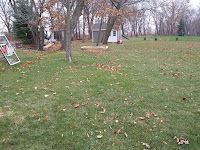
Before - struggling grass
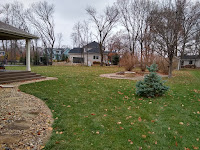
In the narrow woodland along the back the grass was thin, hard to maintain and also required lots of trimming around the trees.

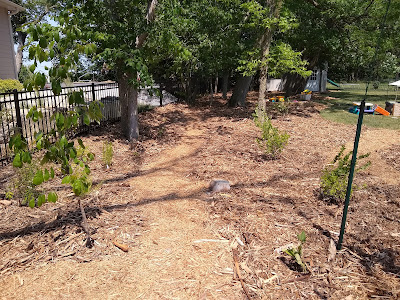
We added in native understory plantings like columbine, woodland phlox and ferns, as well as some raspberries and blackberries. A wood chip nature path provides access and recreation.


From the orchard into "the woods" on the mulch path

I am excited to share more projects, including permaculture inspired yards from this season, in upcoming posts!

For now, I'll leave you an image from a past presentation with Bill Mollison's definition of Permaculture.  Bill Mollison is the co-founder, along with David Holmgren, of the Permaculture movement.


Friday, February 12, 2021

Drake University Food Forest and Sprout Garden

New trees in the mixed orchard space at Sprout

Sprout: The Des Moines Urban Youth Learning Garden at Drake University was established in 2012 through the work of environmental science students and a grant from the State Farm Youth Advisory Board.  It serves as a community hub for environmental education and healthy food access for the neighborhood surrounding Drake University.  Produce from the garden is donated to the community through the Little Free Pantry, the Boys and Girls Club, and to students and volunteers.

Previous location on Forest Avenue

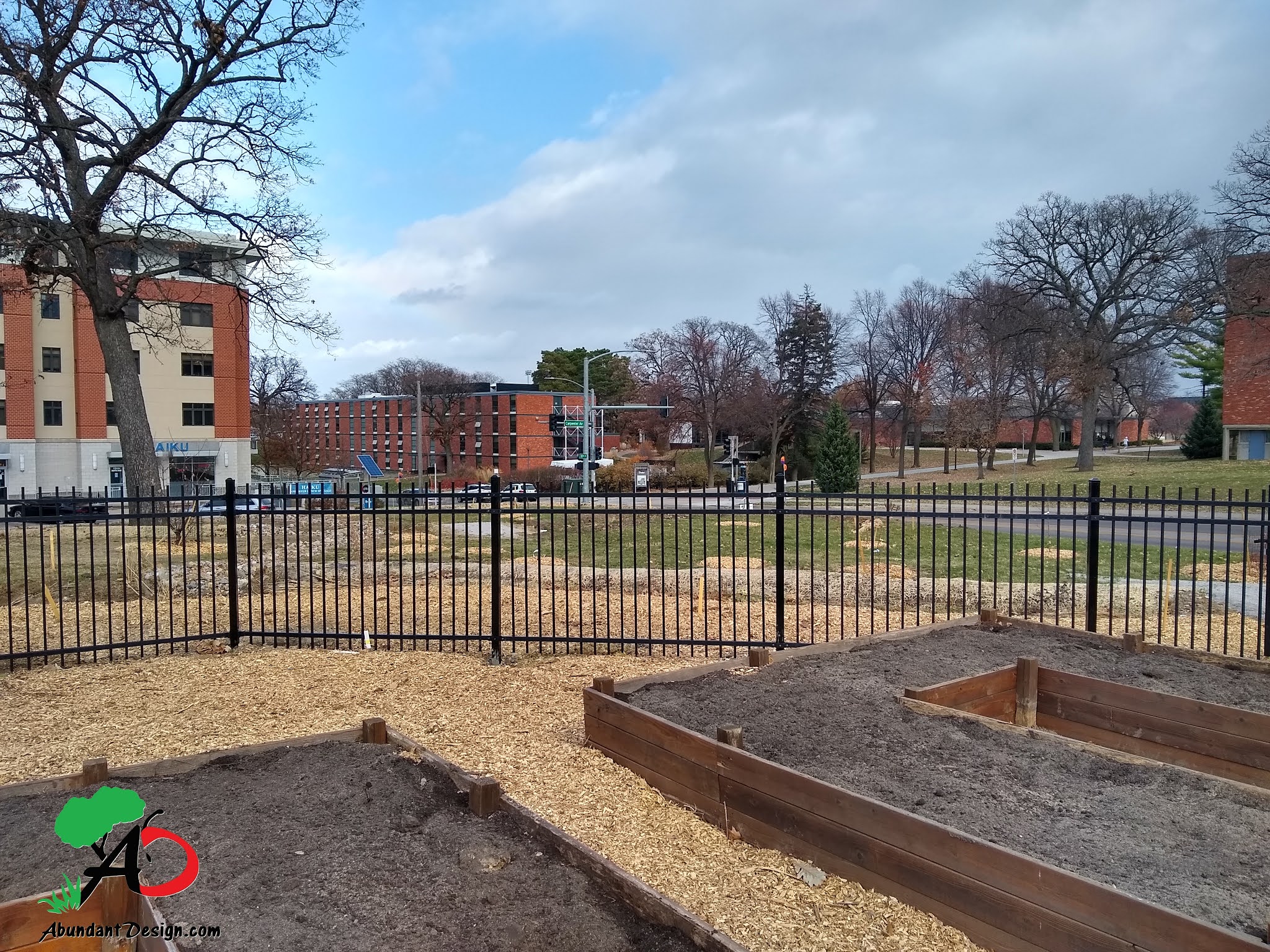
The Sprout Garden was originally located on Forest Avenue, near the Knapp Center and Boys & Girls Club, but due to new development the Sprout Garden had to be relocated.  The new location at 30th & Carpenter is a prime location as the gateway to campus.  The move also offered an opportunity for a redesign and introducing new features.  Through word of mouth and our previous work at DMACC, Abundant Design was selected for the project.

Campus "Gateway" on 30th St off University Ave

Meetings were virtual, budgets and timelines were tight.  Permits & getting approvals pushed back the start date, and approaching winter could put a hard stop on the installation.  Trying to reuse and bring over from the existing location as possible we took inventory of what we could salvage.  Ideas and possibilities were discussed among potential interested parties, with the current open space redesigned through several rough drafts into a food forest park, with permaculture tree guilds, runoff capturing rain gardens and gathering spaces.

Work began with new site prep, grading and rainwater catchment to hydrate the parched lot and manage stormwater.

Site assessment and beginning dirt work

Snow and rain helped confirm soil infiltration rates after construction

Student volunteers helped move native plants over to supplement the rain garden plantings.

Final overflow - three rain gardens double as On Contour Swales 

The garden shed was next, along with the rain barrel, and a new gathering/presentation space. Almost stadium style bench seating was built with the limestone brought over.  The existing gingko trees from the green space were moved into the parkway for street trees requirement.  This conserved budget and gave us lower growing trees as not to shade the garden production areas.

The Drake facilities team members were great to work with, and getting the shed and arbors moved.


That early first snow gave me a scare that the nice weather wouldn't last!

But luckily it did!

Garden beds were modified from the previous rectangular beds (seen above) to keyhole beds using the aged but mostly reclaimed lumber.  These keyholes allow for easier access to the plantings while increasing overall growing area, all with a smaller overall footprint.

Keyhole raised bed construction

Wood cores will give them an almost hügelkultur effect, feeding beneficial fungi and helping to retain/wick moisture.

Aged wood lined beds and fungal activity

At the end of Season one had the garden space moved and a great start on the mainframe of the forest garden park.

Arbor entry into the gardening area

Raised beds, in-ground grow space, fence with orchard behind
Teaching space with limestone benches off shed

You can follow the Sprout Garden on 
Facebook for gardening tips, community resources and volunteer opportunities.