Our Mission:

Our Mission: To enable individuals and communities to take an active part in the cultivation of systems that provide the highest quality fruits, vegetables, herbs and other yields, in a way that benefits themselves, cares for the land and environment, and provides a surplus to use, share and reinvest into the system.
Showing posts with label Lawn. Show all posts

Friday, February 9, 2024

Parking Pad to Garden Transformation

These new homeowners had an idea for their backyard, and it didn't include the existing gravel parking lot.


They also had significant yard damage from a geothermal system, that was not repaired the way they had expected.


The goal was for a natural, relaxing space filled with as many edible and ecological benefiting elements as possible.

We began with three main goals- a garden, a patio and a fence.  Garden beds were high on the priority list for clean growing fresh produce!  A relaxing patio for their firepit, surrounded by a natural environment using some of their existing plants and lots of new natives.  A future fence was planned to separate the new space from alley noise and traffic.


Many edible plants were hoped for both in the garden area and even around the yard.  We put in as many perennial and edible plants as practical for this space.  Rhubarb, asparagus, berries and even an apple tree.

Initial site work involved removing the gravel and breaking up the compaction of years of traffic.  We left a circle of the existing pad for the base of the new paver patio.
 

A keyhole style bed maximizes growing space on a smaller overall footprint.  
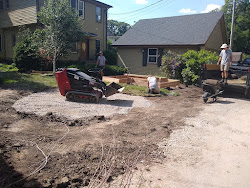
Raised frame beds allowed us to bring in a fresh mix of clean soil to grow in.


We added compost to the remaining planting areas to add organic matter, build soil structure and workability, as well as encourage soil life.


With a limited space and south facing wall, this was a perfect space to espalier an apple tree.  The downspout from the garage allowed us to capture rainwater for use right by the garden.


Companion plants were included in this tree guild -
    Yarrow to attract beneficial insects
    Clover for nitrogen fixing action
    Chives to protect the trunk from rabbits
    Other herbs for their antimicrobial benefits

A decorative Japanese Maple was the focal point for the back corner with an Asian palette, a Serviceberry up front for a native edible shrub and multiple species of native woodland and savanna plants along the neighboring garage.  Bee Balm is great addition against the patio as it repels mosquitoes and feeds beneficial pollinators, and dwarf varieties soften the edge from lower to higher plantings.  Narrow evergreens will frame the future access gate and provide shades of green in the winter.

Great work on the patio from Ben's crew at Beemer Landscaping

We had just completed another project where a large amount of sod was removed.  So, after leveling the damage to the side yard we were able to upcycle it here instead of only reseeding.


The stepper path was re-laid through the damaged lawn area, using the existing pieces and we were able to match extras we needed.  The path was also extended from the back sidewalk to the patio area and gate.  


Finally, everything was mulched and finished.  A few weeks of garden care during their vacation, and then an additional Redbud tree for more afternoon shade.  It was all ready for the privacy fence install.

Paver patio backed by a Japanese maple

Raised bed garden behind the existing hedge

Pollinator friendly prairie natives benefit the garden too


A little taste of Eden in the heart of our city.  If you like this project or our others, we'd love it if you shared it with your friends!

This visitor couldn't wait for us to be done :)
Swallowtail butterfly getting a drink


Thursday, January 4, 2024

No Mow - New Construction

Another large project was started in the previous season incorporating stormwater best management practices into a full native planting that includes basically the entire property.  

The home was built for a gentleman that wanted to be very responsible and not contribute to ANY stormwater runoff, erosion and flooding.


Woodland & savanna styled plantings in the front incorporated a walking path, some native shrubs and smaller trees.  Several invasive burning bushes were taken out.   A rain garden captures the front down spouts as well as most of the driveway runoff.
Front yard #Before

Front yard - planted and mulched

The front Rain Garden was full after a storm in the night but had drained by early afternoon.


Prairie party out back!

To get the back yard looking good, designed plantings of established plants and a large rain garden up closer to the house and deck.   


The deck provides prime viewing of the eventual prairie habitat, as well as access to the paths through it.
Prairie with rain garden view from the deck

Further back targeted native seedings were planned to reduce the initial budget.  To accomplish this, 8000 square feet of yard was tilled and "Solarized" for several weeks to kill the grass and shallow weed seed bank.

Solarizing 8000sf of yard

Around September, we removed the plastic sheeting and planted an oat cover crop to hold soil and keep weeds at bay.  Prior to the cover crop seeding, we pulled and flamed the remaining weeds that took advantage of tears in the plastic caused by curious deer.


We left a ~6' strip of mowed turf lawn on the South edge to be good neighbors.  We put in some sod around the areas damaged by the construction and existing lawn behind.  The neighbors to the North were fine with the savanna and prairie plantings coming up to their fence.  They had somewhat similar plans for their backyard.  

The entire foundation area was edged with river rock for ease of maintenance and access.


This last season we returned for maintenance help and vacation weeding.  The homeowner was doing a great job keeping the seeding mowed to a height where the perennials can grow roots, yet aggressive annual weeds were kept from going to seed.  These steps are very important when establishing a new native planting from seed.

The nearer plantings really grew this last summer!


We are excited to continue watching this project grow and grow!


Tuesday, November 21, 2023

Rain Garden Design & Installation Video

Learn how a Des Moines couple took advantage of one of Central Iowa's stormwater rebate programs to install a rain garden on their property!

Here is a new video collaboration we did with The Rain Campaign this summer-

This rain garden was part of the Easter Lake Watershed cost share program.  Runoff from the driveway and part of the roof, as well as from part of the neighbor's driveway is collected in these basins.  These basins filter and sink the rain into the ground instead of contributing to the storm surge and pollution.

Patchy lawn #Before
Reworked sizing for split basins

Laying out plants

Fresh Rain Garden Install   #After

Soil Quality Restoration (SQR) was done on the remaining turfgrass later, and additional native plantings are planned for next season.

Abundant Design can help with all your stormwater needs, link for more info-

Tuesday, May 2, 2023

Creeping Charlie - Killer Recipes

Creeping Charlie, or ground ivy, is one of those weeds that just won't quit.  It was brought over from Europe by settlers that thought it would make a nice ground cover for shaded areas.  And that it does well, thriving in moist and shady locations!  

However, Creeping Charlie also grows well in sunny locations and can be an unwelcome invader to grass lawns.  It spreads by both seed and vining stems which root about anywhere it comes in contact with the ground. These vining stems can even hitch a ride under lawn mower decks that move from yard to yard.

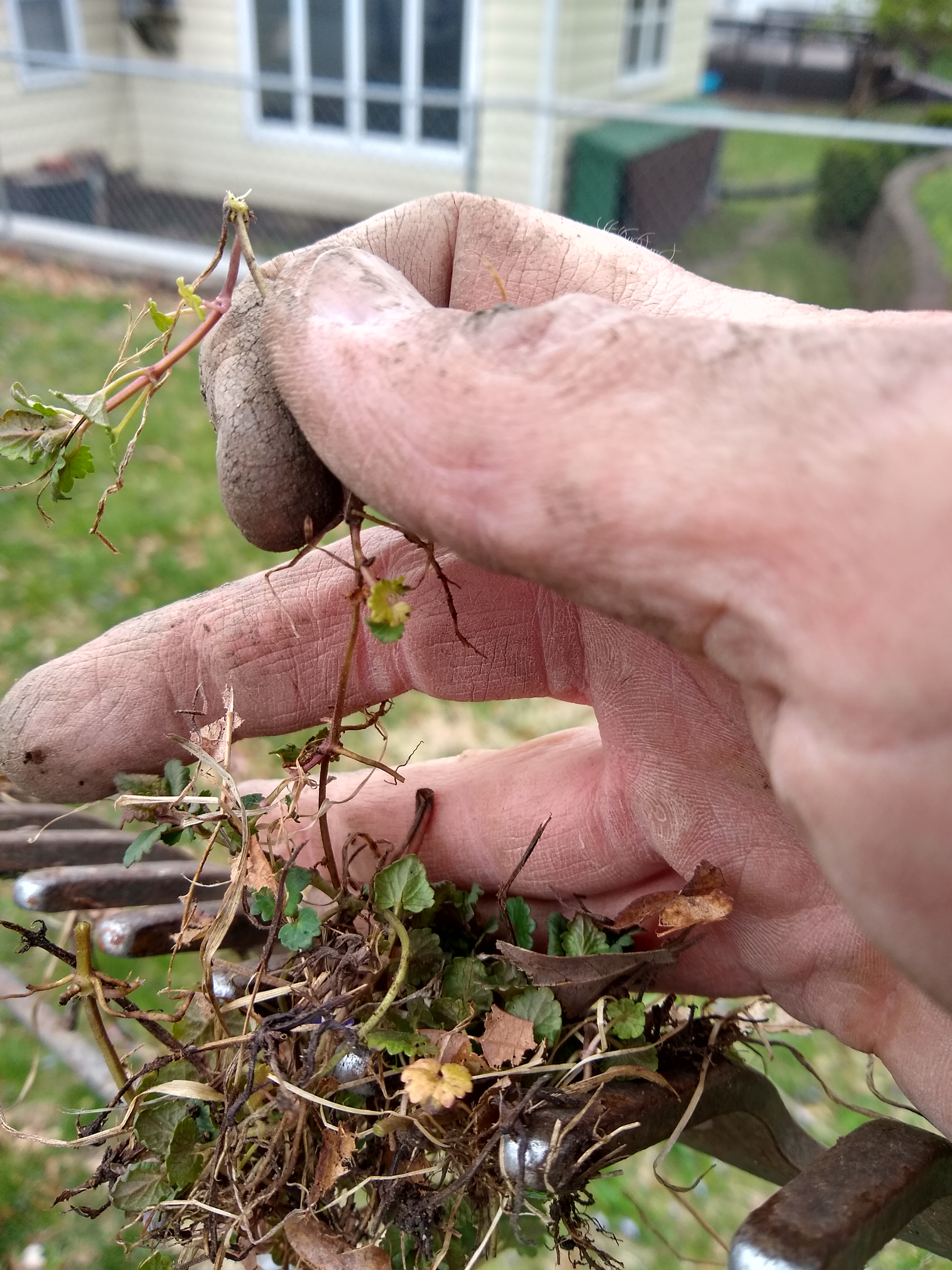
Creeping Charlie running stem with roots

The leaves are rounded with scalloped edges and have a somewhat strong smell when cut or crushed.  Many people think it smells minty and pleasant.  It can be used to make teas, added to salads or cooked in soups.  Although I will likely pass, I don't like it much.  I do sort of wish I had saved and potted a little bit when I removed it from our yard.

Unlike a lot of my posts about plants, this recipe is for controlling them in your lawn, specifically Creeping Charlie!

     More foraging info for those interested can be found here- 

Creeping Charlie blooming with its small, bluish funnel-shaped blossoms

Enter Boron

Boron is a necessary micronutrient for plant growth, helping with sugar transport, cell division and seed development. Without enough boron in the soil, plants may appear healthy but will not flower or fruit.  The balance of too little or too much between plants and boron is a delicate one, and heavy boron soil concentration can be toxic to plants.  Luckily for those who have a this weed problem in their lawn

Creeping Charlie is very susceptible to too much Boron.

This recipe for controlling it originally came from Iowa State university.  They removed the article initially, as many people were killing their lawns permanently.  It has been republished here, with plenty of warnings.

Horticulture and Home Pest News, and Iowa State University Extension and Outreach

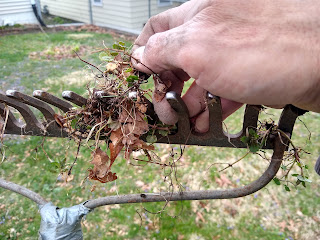
I've added some steps to help increase effectiveness, and reduce the risk of killing your grass with Boron toxicity. First you'll need to rake out as much creeping charlie as you can. Aggressively go after the running stems as they will try to regrow.  A stiff tined garden rake works very well for this part.


Next, I recommend starting with just half strength (5oz Borax) of ISU's recipe below

Recipe for Borax control of ground ivy on bluegrass
     (Caution: apply over recommended area to avoid toxicity symptoms)
Treats 1,000 sq. feet:
Dissolve in 4 oz. warm water to help dissolve the borax
Dilute this premix in 2.5 gal. water


If the Creeping Charlie returns to your lawn, you'll need to rake the rhizomes out again.  It should definitely be less this time, and then use a 2nd half strength application.

If it happens to come back again, it should at least be in sporadic patches and way more manageable with patience and a bit of maintenance raking.


Recent articles claim long term control with Borax is limited, but my anecdotal experience says it really helps get ahead of it and you can keep it under control with a little diligence.