Our Mission:

Our Mission: To enable individuals and communities to take an active part in the cultivation of systems that provide the highest quality fruits, vegetables, herbs and other yields, in a way that benefits themselves, cares for the land and environment, and provides a surplus to use, share and reinvest into the system.
Showing posts with label Weed. Show all posts

Tuesday, May 2, 2023

Creeping Charlie - Killer Recipes

Creeping Charlie, or ground ivy, is one of those weeds that just won't quit.  It was brought over from Europe by settlers that thought it would make a nice ground cover for shaded areas.  And that it does well, thriving in moist and shady locations!  

However, Creeping Charlie also grows well in sunny locations and can be an unwelcome invader to grass lawns.  It spreads by both seed and vining stems which root about anywhere it comes in contact with the ground. These vining stems can even hitch a ride under lawn mower decks that move from yard to yard.

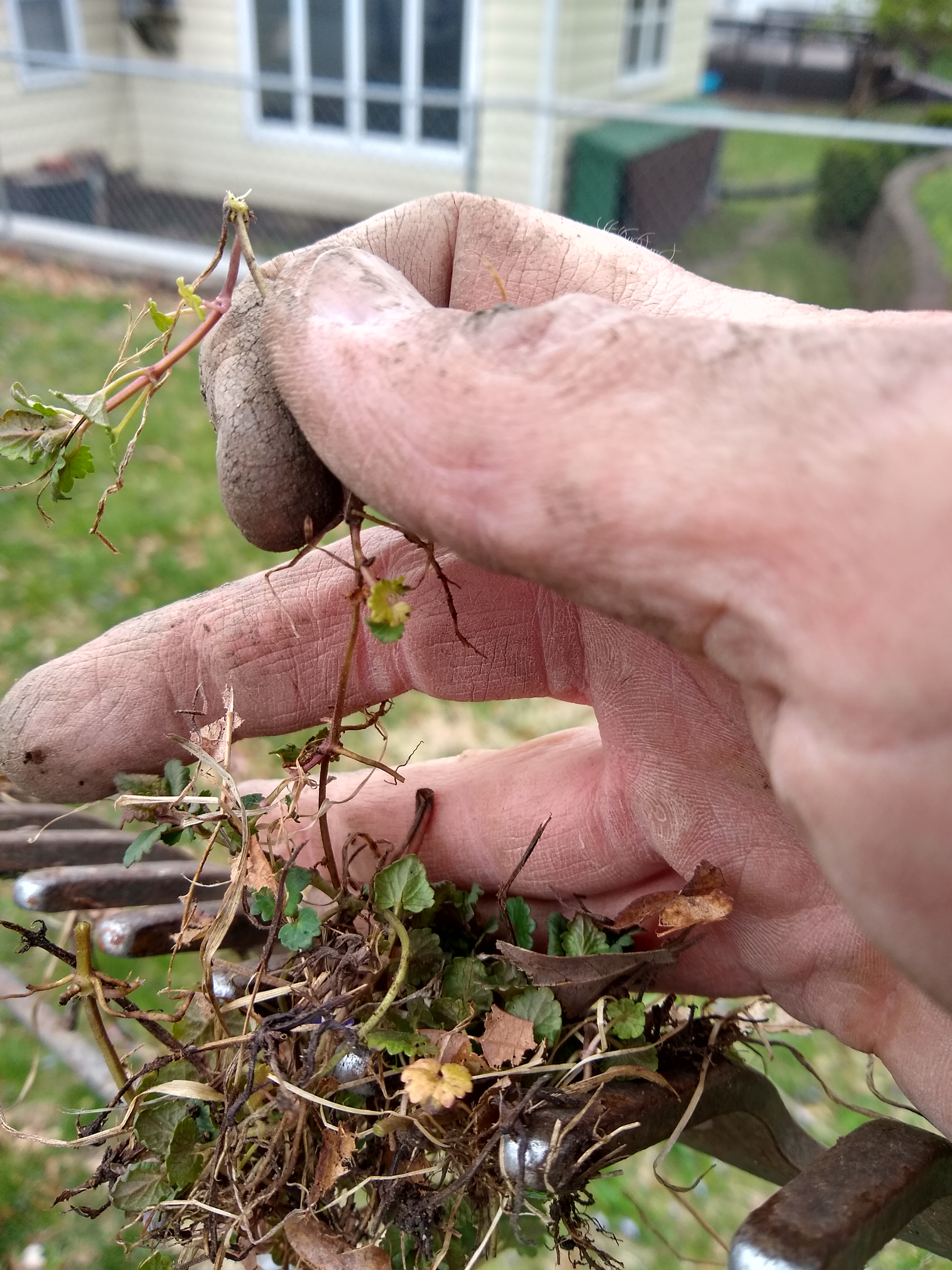
Creeping Charlie running stem with roots

The leaves are rounded with scalloped edges and have a somewhat strong smell when cut or crushed.  Many people think it smells minty and pleasant.  It can be used to make teas, added to salads or cooked in soups.  Although I will likely pass, I don't like it much.  I do sort of wish I had saved and potted a little bit when I removed it from our yard.

Unlike a lot of my posts about plants, this recipe is for controlling them in your lawn, specifically Creeping Charlie!

     More foraging info for those interested can be found here- 

Creeping Charlie blooming with its small, bluish funnel-shaped blossoms

Enter Boron

Boron is a necessary micronutrient for plant growth, helping with sugar transport, cell division and seed development. Without enough boron in the soil, plants may appear healthy but will not flower or fruit.  The balance of too little or too much between plants and boron is a delicate one, and heavy boron soil concentration can be toxic to plants.  Luckily for those who have a this weed problem in their lawn

Creeping Charlie is very susceptible to too much Boron.

This recipe for controlling it originally came from Iowa State university.  They removed the article initially, as many people were killing their lawns permanently.  It has been republished here, with plenty of warnings.

Horticulture and Home Pest News, and Iowa State University Extension and Outreach

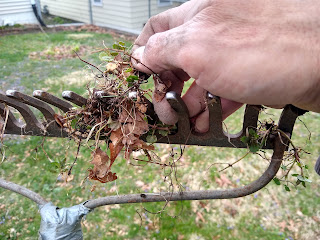
I've added some steps to help increase effectiveness, and reduce the risk of killing your grass with Boron toxicity. First you'll need to rake out as much creeping charlie as you can. Aggressively go after the running stems as they will try to regrow.  A stiff tined garden rake works very well for this part.


Next, I recommend starting with just half strength (5oz Borax) of ISU's recipe below

Recipe for Borax control of ground ivy on bluegrass
     (Caution: apply over recommended area to avoid toxicity symptoms)
Treats 1,000 sq. feet:
Dissolve in 4 oz. warm water to help dissolve the borax
Dilute this premix in 2.5 gal. water


If the Creeping Charlie returns to your lawn, you'll need to rake the rhizomes out again.  It should definitely be less this time, and then use a 2nd half strength application.

If it happens to come back again, it should at least be in sporadic patches and way more manageable with patience and a bit of maintenance raking.

Recent articles claim long term control with Borax is limited, but my anecdotal experience says it really helps get ahead of it and you can keep it under control with a little diligence.

Sunday, July 19, 2015

Alternative Homebrew Herbicide for Safer Water and Cleaner Environment

The Iowa River near my boyhood home
We hear about it all the time.  Chemicals in our water - fertilizers, pesticides, pharmaceuticals and more.  No, these are not good things!

The Des Moines Waterworks has even made national headlines recently about suing several counties upstream for high nitrate levels in the Raccoon River.  Nitrates can come from runoff from nitrogen rich soils, especially when fertilizers have been applied.  The Raccoon River is the source of most of Des Moines areas drinking water.  These nitrates, linked to "blue baby syndrome" and some cancers, must be removed from drinking water by the waterworks facility to levels regulated by the federal government.  Surprisingly many facilities put these nitrates back into the river downstream!

Pesticides are also linked to many health problems.  The battle rages on over glyphosate, commonly marketed as Round Up by Monsanto, whether or not it is a probable carcinogen and endocrine disruptor.  No doubt the amount applied to herbicide tolerant crops has gone up!

With these horror stories about the consequences of conventional farming, how much worse could it be?  Surprisingly, much worse... about 10 times worse!

Homeowners own more than half of the land in the United States, over half of our landscape is lawn!  And, according to the United States Fish and Wildlife Service, they use up to 10 times more chemical per acre than conventional farmers!

That's where we can make things happen!  Our lawn care practices, along with everyone else's, can have a huge impact on our water and overall environmental quality.
  1. Building top soil, which is a major problem in newer developments, will help with overall plant health, whether its your lawn, flower beds or vegetable garden.
  2. Increasing organic matter will boost soil life making nutrients readily available to plants, and also help retain water during dry periods and allow the soil to be worked earlier during wet Springs.
  3. Mowing higher 3" or more will shade the soil keeping it from drying out and shade weed seedlings.  It will also promote deeper roots and thicker more competitive grass.
  4. Allowing a few "weeds", like clover to boost nitrogen or dandelion with its taproot that brings up nutrients from deeper in the soil than grass roots can access.
  5. Use less toxic ways to control insects and weeds.
Speaking of weed control, here's the secret recipe for an organic herbicide that's so "toxic" you can use it to make pickles!
Vinegar

That's it!  Pretty tough right?  Vinegar alone is an excellent weed killer due to it's acetic acid content.  Most varieties contain 5% acidity, but pickling vinegars can be up to 18%.  I've used plain old 5% vinegar to kill many weeds.  But my new favorite is a combination of vinegar, salt and a surfactant like dish soap or an essential oil which will help the solution stick to the leaves giving it a better chance of working.

In a hand held yard sprayer, I mix:
  • 1 gallon Vinegar
  • ~3 tablespoons of salt
  • 3-5 drops of dishsoap

I don't know exactly what the salt is supposed to do, but many of the recipes online have it, and its a cheap addition so I've kept it in for now...

I know this stuff works.  Applying earlier in the day, when the sun is really going to shine, helps it achieve better results.  This also works best with younger weeds, older established plants may need several applications to finally kill the root.  Here are some pictures.

   
Spurge:       Time Zero                       2 Hours Later                          
 
                Black Medic: 2 hours later (light spray)           Dandelion: 2 hours later

A bit of caution before you spray your yard with this.  It is non-selective, like glyphosate.  That means it will kill most everything, including your grass.  So start with smaller amounts when attacking weeds in your lawn, see the light spray on the above picture of black medic.  This makes it great for reinforcing an edge of a planting bed, or killing weeds that are invading cracks in your sidewalks or patios.

      Edge of a strawberry patch              Along driveway and edging bricks

Another caution with this herbicide is that it can leave a bare patch, which is usually filled back in quickly with grass by rhizomes, but can occasionally be an invasion site for opportunistic weeds such as crabgrass.  Also,vinegar is often used as a "green" cleaner and disinfectant, which means it kills bacteria and fungi, including beneficial bacteria and fungi that live in the soil.  So, keep your applications small and on target, using only as much as necessary, for best results.


Have a great week, and I encourage you to take The Great Healthy Yard Project pledge by visiting TGHYP.com.