Our Mission:

Our Mission: To enable individuals and communities to take an active part in the cultivation of systems that provide the highest quality fruits, vegetables, herbs and other yields, in a way that benefits themselves, cares for the land and environment, and provides a surplus to use, share and reinvest into the system.
Showing posts sorted by relevance for query water. Sort by date Show all posts

Friday, February 19, 2021

Water Water Everywhere #2 - Water Quality & Impact

Iowa’s native prairie and savanna had deep, rich, healthy soil with abundant microbiology and good infiltration rates.  Most rain soaked into the soil, recharging groundwater, that eventually fed our lakes and streams with clean water.  Now many roads, buildings and compacted lawns shed rainfall instead.  

In 
Water Water Everywhere #1 (too long ago to be a series...?) we went into changing land use in detail.  For this next part we will talk about how this effects water quality and pollution.
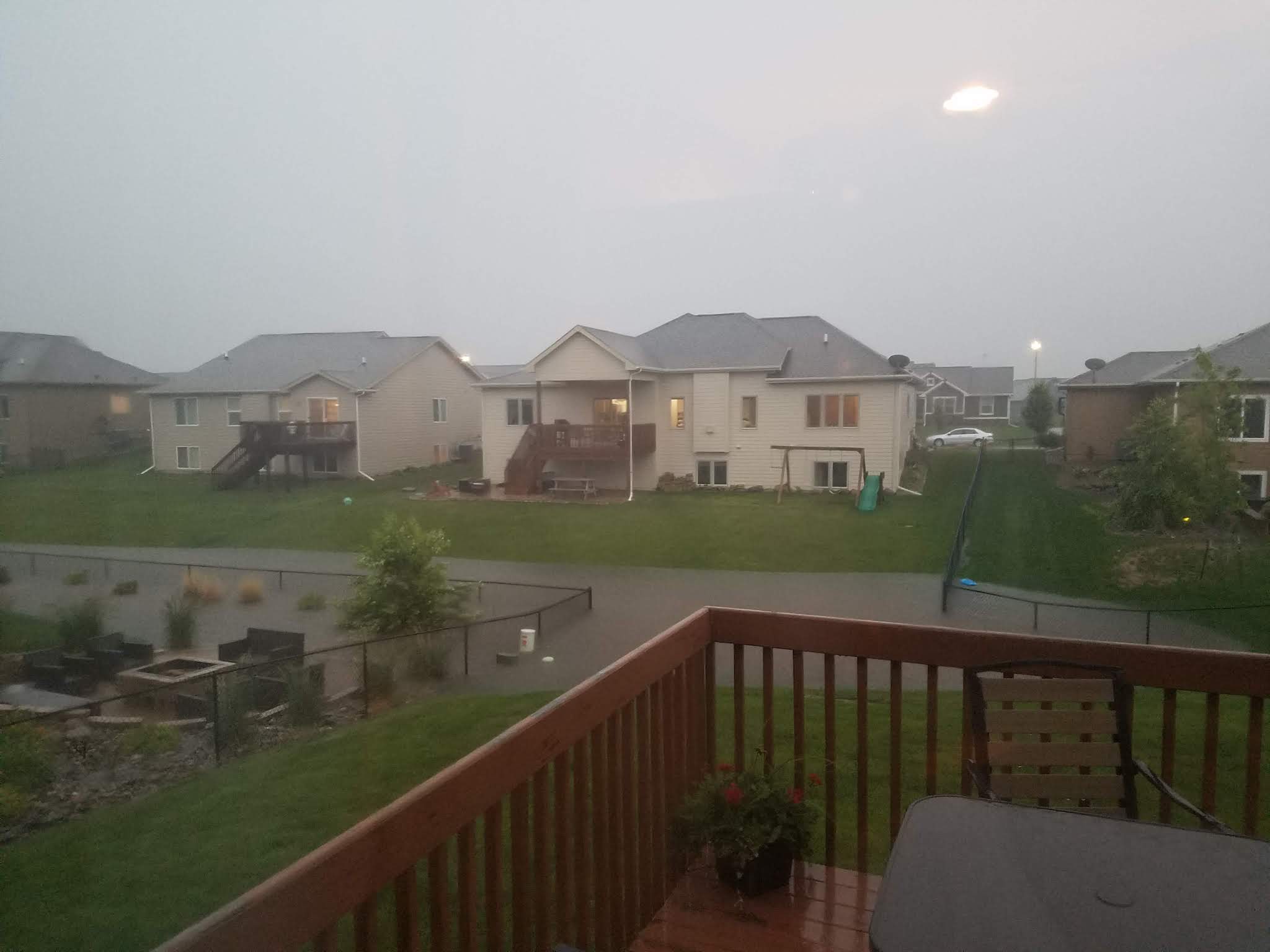
Increased runoff through a suburban development in Ankeny

With this increased runoff and flooding, this water now has the energy to pick up lots of trash and other pollutants.
Trash in Yeader Creek (and yes it looks like this every time it rains)
Photo courtesy of Julie Perreault – Polk Soil & Water Conservation District 

Along with garbage, water coming off parking lots, driveways and roads can be contaminated with gasoline, motor oil and heavy metals.  (Grass clippings and leaves in the street are also easily carried away, more about those later.)  These compounds, and toxic elements, breakdown slowly in the environment and directly threaten the health of people, fish and other aquatic organisms.  
Oil in parking lot at Easter Lake Park
Oil slick in Yeader Creek
Photos: Julie Perreault – Polk Soil & Water Conservation District 

Increasing water speed also creates erosion, damaging property and picking up sediment.  Sedimentation is a major contributor to water pollution by reducing water clarity and smothering habitat in streams and lakes.  Recreational lakes downstream may fill in with sediment and need to be dredged out, at considerable expense.  Sediments also carry with nutrients, especially phosphorus.
Eroded streambank near West Des Moines


Nutrients like nitrogen and phosphorus can stimulate harmful algae blooms and bacteria growth, reducing water oxygen levels and sometimes toxic on its own.  Grass clippings, leaves, pet waste and lawn fertilizers are other stormwater pollutants that contain high nutrient levels, as well as additional bacteria, that contribute to poor water quality.  All of thes factors can lead to fish kills and beach closures.


Insects also love stagnant backwaters left behind as flood water recedes.  These pools are perfect breeding grounds for mosquitoes as predatory fish mostly follow the receding water back to safety of the lakes and streams.


These swarms often cause even more contamination, as the cure is worse than the disease...


Watch for the next post in the Water Water Everywhere series (it hopefully won't be as long between) as we look at solutions for homeowners, farmers and anyone concerned about clean water.

Badger Creek at Sunset


#SlowItSpreadItSinkIt


Saturday, June 29, 2024

Water Water Everywhere #3 - How NOT To Do It

Iowans are dealing with heavy rains and record setting tornado activity this season compared to the drought like conditions of the last couple years.
Funnel cloud over our jobsite about 30min after I left last Tuesday

Northwest Iowa has been hit especially hard with flooding with several counties declared Federal Disaster areas.
Read to the end for ways you can help!

Last year headlines were filled with flash flooding and the Atmospheric River over California.

In this third installment of the Water Water Everywhere Series, I originally wanted to share some Simple Solutions, but before I do I think it is fitting to contrast it first with What NOT To Do!

Before you continue, you might want to check out the first two articles-

Over the last couple years, I've tried to bring awareness to the problems of increasing runoff - 

Flooding, Pollution, Desertification and more...  

Today I share the thoughts of a friend of mine, that he shared on social media awhile back during another Natural Disaster.  I forget which one now, likely Hurricane Katrina, but his words stuck with me.  It is scary how it seems we have actually taken steps to make ourselves and communities Less Resilient and More Fragile.

The following is from a post by Ben Falk, a well-known Permaculture Designer and Author.  Ben and I have swapped seeds and plants, and I enjoyed watching his excellent Permaculture Skills DVD course several year ago.


"Design for brittleness rather than resiliency - ahhh "natural" disasters - they always make it so starkly clear. If humanity wants to multiply - rather than reduce - the affects of disasters, we couldn't be doing a better job:


Step 1: Concentrate population densities in the lowest-lying coastal areas after draining them of their storm surge-absorbing wetlands and estuaries. Make sure it's also the most active hurricane path on the planet. Bonus points for making sure other ...fast-growing regions have the opposite problem - NO water.

Step 2: Pump as much carbon and other climate destabilizing gasses from the geosphere into the atmosphere as possible.

Step 3: Turn as much permeable, cooling, green landscape into black, impervious pavement and rooftops as possible. Concentrate all stormwater runoff. Bonus points for mixing it with sewage when it rains really hard. Double bonus points for lawn. Triple bonus round for golf courses and shopping malls. Quadruple bonus points for destroying town centers in favor of strip development.

Trash in Yeader Creek (and "yes it looks like this every time it rains")
Photo courtesy of Julie Perreault – Polk Soil & Water Conservation District 

Step 4: Ensure all new development is built with total dependence upon active air conditioning. Bonus points for glass high rises with non operable windows - vertical greenhouses without, you know, the plants. Double bonus points for failing to put passive air cooling in nursing homes, hospitals and emergency shelters.


Step 5: Don't harvest or store any drinking water locally. Ensure total dependence on government emergency shipments of tiny bottles of water when none is available. Bonus points for polluting all surface waters so they can't be drank. Double bonus points for contaminating ground water aquifers.

Step 6: Rebuild and do it all over again. Bonus points for getting government grants. Double bonus points for growing the economy to attract more people to "hard hit" regions so that it will be even worse the next time around."


So, how do you think are we doing?


Watch for the next post in the Water Water Everywhere series as we look at real solutions for homeowners, farmers and anyone concerned about clean water.

Water Water Everywhere #4 - Real Solutions

Until then, Ben has a revision of his book The Resilient Farm and Homestead.  You can hear him talk about it on Episode #3427 of the Survival Podcast and order it HERE or at Chelsea Green Publishing.


If you would like to help the people in NW Iowa you can donate and/or volunteer with-

Convoy of Hope  or  8 Days of Hope

Sunday, January 8, 2017

Water - Lawsuits, Dead zones and Runoff

The Des Moines Waterworks lawsuit is set for this year.  Bill Stowe has made it his mission to sue Sac, Calhoun and Buena Vista counties for costs incurred in the removal of nitrogen from the nutrient laden runoff which provides the Des Moines metro area with much of its drinking water.  The Farm Bureau and other agriculture groups have made it their mission to stop him.
 
Moon reflecting off Beaver Creek
This media circus has made its way through all the news channels, even the New York Times and Huffington Post have picked up the story.  Legal fees, for both sides, have already exploded with nothing yet spent to actually clean up the waterways - for drinking or otherwise.  Posturing from both sides is what we have come to expect in our current political climate.
 
The nutrients in the water are making a big mess!  Everywhere!

Nitrates (a form of nitrogen) in drinking water is a serious health problem.  Particularly for babies, and pregnant or nursing mothers, nitrates in the water can hinder the hemoglobin in blood from carrying oxygen.  This leads to "Blue Baby" syndrome, with digestive and respiratory issues, brain damage and even death. 
 
Even for adults, long term exposure has been linked to serious health effects.  Potential problems include miscarriage, birth defects, thyroid disorders and even cancer.  Stomach, bladder and neurological cancers have recently been linked to high nitrate exposure.
 
Beyond our drinking water, nitrates and phosphorus (another fertilizer component) are causing problems in our lakes and waterways.  Fish kills are common news in Iowa.  Certain blue-green algae thrive in these nutrient rich waters producing toxins with serious health risks that cause many beaches to be closed.
 
Local waterways aren't only problems for Iowans.  Read this article by The Great Healthy Yard Project founder Dianne Lewis Protect water from dangerous algae: View
 
These problems also flow downstream through the rivers to the Gulf of Mexico. The giant Hypoxia Zone forms where the Mississippi River dumps tons and tons of Nitrogen and Phosphorus laden runoff from the entire Midwest agricultural regions.  These nutrients are quickly used by algae which then multiply rapidly.  The result is a dead region of the Gulf that gets bigger each year, bigger than the area of Connecticut and Rhode Island combined!
 
NOAA's Happening Now:Dead Zone 2015
 
The newly elected Republican's in the Iowa House have stated that water quality is their top priority.  Not typically known for their environmental stance, they will try to clean up the water better then their Democratic colleagues had, even with their greener reputation.  Both parties are beholden to the electorate and their donors so we shall see what happens.
 
Some reduction in nutrient runoff has been made recently, but there is so much yet to be done. 
The Iowa River where I grew up
Efforts by Iowa State and the Leopold Center include the Prairie STRIPS program, which can reduce nutrient loads by 90% with a 10% allocation of fields to native prairie plants.

Listen to a STRIPS story on NPR here
 
My friend Ray Meylor of the Cherry Glenn Learning Farm watershed mitigation project penned a letter to the Cedar Rapids Gazette highlighting the benefits and reproducibility of that project near Saylorville Lake.
"Imagine if similar projects were launched all along the 127,000 impaired waterways in Iowa. Such a movement would not only mitigate our state’s water quality issues, it would bring new farm families into our rural communities, rebuilding our rural economies and communities." 
"There is no need to take school education dollars or increase our sales tax to fix Iowa’s water quality problem"
 
Water quality issues, along with low corn and soy prices, could nudge some farmers to experiment with other crops, like cover crops and edible crops.   These are showing promise for tying up excess nutrients and preventing then from washing into waterways during the times when no cash crops are growing.  Many are finding that input costs go down and income per acre increases over a several year period even if yields stay the same or drop slightly.  Additionally cover crops can be grazed by livestock diversifying your investments and adding additional income streams.

In addition to our edible landscapes that provide many ecological benefits, Abundant Design can help you design and install filter strips and riparian areas on your farm that can produce a yield for your family or for market as well.  I have contacts I can put you in touch with that can market your surplus if desired.  Nutrient runoff and sediment will be mitigated at the same time.  Many alternative crops can thrive in these settings providing habitat for wildlife as well as fresh fruit and a beautiful setting for you.
 
If farmers in Sac, Calhoun and Buena Vista counties, as well as all of us, start implementing the strategies above (STRIPS, watershed mitigation, cover crops, etc.) the runoff issues will go away. 
Nitrogen removal costs go down for Des Moines Waterworks, and their customers;  
Unhealthy nitrates are reduced in our drinking and recreational waters; and  
Farmers can continue their livelihoods without large settlements or additional regulations.
And that's good for all of us! 
 

Geese landing on Walker Slough

Sunday, March 22, 2015

Spring is here ...and World Water Day

Spring is Here!

Spring has been teasing us for some time here in Central Iowa and it has finally arrived.
The crocuses are blooming under our peach and apples trees.  The tulips are racing to catch up!
 

The returning Canadian Geese are pairing up, some deciding they'll skip the rest of the trip and become "locals."


Last week I thinned my tomatoes and peppers in their starting trays, maybe a little later than I could have. 
And now they have been transplanted into pots that I hope will give them room to grow until the soil warms enough. 

 
(For more on these frugal pots click here)
 
Once the ground is above 50° I will move them out.  Any before this and their growth can slow enough that they won't grow as fast as they would've had I just waited a few more days.
 
Now is also a good time to plant most greens.  I planted a couple varieties of spinach but didn't get to the Parris Island Cos lettuce, my favorite tasting.  Maybe this week yet...
We also planted a couple rows of peas, Little Marvels and Mammoth Sugar Snap.  Very few of these make the trip from garden to kitchen last year :)
 

World Water Day  

March 22nd has been designated World Water Day. You can learn more about World Water Day, and how you can help others around the world through these following organizations.
    
World Water Day homepage


We often don't think about lack of water here beyond a droughts effect on local agriculture or our lawns.  But we have had some dry years lately and there are things we can do to conserve water right here in our own landscapes.
 
Increasing your soil organic matter by only 1% can hold more than 20,000 gallons of additional water in the ground.  This increased water holding capacity can help your grass, plants or crops survive longer dry spells with less stress.  Drought stress can cause lawns to go dormant and brown, flowers and gardens to wilt and crops will lose yield.
 
You can learn more about saving rain water in barrels and more in my post from last July.
 
Have a great week!
Jeff
 

Sunday, June 21, 2020

Rain Garden in Action

This rain garden was finished a couple weeks ago in Des Moines.
Rain garden ready for runoff

Within a few days we had a good heavy rain and the customer sent me these photo updates.  At 5am the customer was watching water go over the emergency spillway.  This happens when it's rains more than it would 90 percent of the time.  The spillways are installed to maintain the integrity of the construction and designed to prevent point erosion.


Here is the garden at 9am holding a good amount of storm water from rushing into the nearby lake where it would increase the storm surge, along with erosion/sediment and other potential pollutants.
9am  quite a bit of water


By Noon some water had infiltrated but still a lot in there.  Plants are selected for their ability to thrive in both wet and dry conditions.
Noon   water line is dropping


The mulch is still wet at 4pm.  There are probably a few puddles underneath as well.
4pm    only a few puddles and wet mulch


By the next morning the water had infiltrated into the soil and ground water. Now it can slowly make its way to Easter Lake through the water table.
Following morning


This site had passed the infiltration test but still had a fair amount of clay in the soil, so I was happy to see it work right out of the gate.

The Easter Lake Watershed Project even shared the great pictures and this story on Facebook
"10 days ago this rain garden was installed within the Easter Lake Watershed. The 160 SF rain garden temporarily ponds stormwater runoff from a 1405 SF rooftop area. By capturing and helping the water naturally soak into the ground, we reduce runoff and drainage issues in the yard and help to improve water quality downstream in Easter Lake! Our estimates show that this garden can help reduce about 27,000 gallons of stormwater runoff each year! We can’t wait to see this pollinator friendly garden grow!"
If you would like more information about rain gardens and other Stormwater Best Management Practices visit RainCampaign.org or contact us today for a consultation.


Before

Joe finishing up the mulch


Sunday, September 22, 2024

ISWEP 2024 Private Organization of the Year Award

PRESS RELEASE - The Iowa Stormwater Education Partnership (ISWEP) is pleased to announce their 2024 award recipients.  On September 10, 2024 awards were presented at the Iowa Water Conference in Coralville, Iowa.  

Jeff Reiland of Abundant Design in the Des Moines area accepted the Urban Stormwater and Watershed Protection Private Organization of the Year Award.   This award recognizes the leadership provided by Abundant Design for the design and installation of green infrastructure including Drake University and Easter Lake Watershed projects.   Practices that were installed included bioretention cells, bioswales, and rain gardens.  They are commended for their commitment to improving local water quality.

The City of Grinnell, represented by Daniel Ramos, Jan Anderson, and Greg Roth of Veenstra and Kimm accepted the Urban Stormwater and Watershed Protection Jurisdiction of the Year Award.  This award recognizes the City of Grinnell for the Arbor Lake and English River-Dug Out Creek watershed projects that included permeable pavement, native landscaping, a bioswale, and stream restoration.  They are commended on their partnership effort with Iowa DNR, Iowa Natural Heritage Foundation, Grinnell School District, and RC Properties and their commitment to improving local water quality and flood management.

John Swanson of Polk County accepted the Urban Stormwater and Watershed Protection Partner of the Year Award.  This award recognizes John Swanson and Polk County for the Fourmile Creek Public-Private Wetland Project. Four Mile Creek is an important watershed for Polk County and improving water quality while reducing flooding potential is a priority. Aside from the significant improvements in water quality entering Four Mile Creek resulting from the installation of a wetland, what is unique about this project is the public-private partnership between Eychaner Properties, Polk County, and the City of Ankeny. Polk County funded the design and construction of the project through a combination of grants from IDALS, the Iowa Finance Authority, and ARPA funds.

Greg Pierce of RDG Planning and Design in Des Moines accepted the Stormwater Advocacy Award for providing outstanding advocacy and technical guidance on state stormwater legislation.  He is recognized for his steadfast dedication in creating and promoting effective statewide stormwater design guidance.  This carries through to his passion for protecting and improving Iowa’s water resources. Greg provides great leadership in updates to the Iowa Stormwater Management Manual.  We appreciate his dedication to advancing stormwater design in Iowa.  His tireless leadership that was provided during the past two years during the Iowa legislative session is greatly appreciated.  

Pictures of award presentations by Pat Sauer and Loulou Dickey of the Iowa Storm Water Education Partnership -
Abundant Design - Jeff Reiland
Urban Stormwater and Watershed Protection Private Organization of the Year

City of Grinnell - Daniel Ramos, Jan Anderson, and Greg Roth
Urban Stormwater and Watershed Protection Jurisdiction of the Year

Polk County - John Swanson
Urban Stormwater and Watershed Protection Partner of the Year

Greg Pierce of RDG Planning and Design
Stormwater Advocacy Award

More pictures from the 2024 Iowa Water Conference (here)

Thank you Iowa Storm Water Education Partnership for this recognition and thank you to all our great customers for letting us create your beautiful and functional landscapes!

Tuesday, October 5, 2021

A Naturally Better Lawn

Even though Abundant Design takes out way more turfgrass than we put in, a lush piece of lawn is nice for many reasons.  

A lush green yard has some traditional appeal and is a resilient ground cover for sunny play areas.  It can indicate outdoor 'rooms' or transition zones from one area to another.  It can make a traffic resistant path through more open food forests.  Turf roots can hold soil in place on sloped yards if it can get established and water flow is not concentrated.  Lawn and turfgrass is often required for at least a percentage of the front yard in many residential neighborhoods, whether through an HOA or city zoning ordinance. 


So how do we keep lawns healthy, for the grass, but also for our pets, environment and ourselves?


I have the pleasure of knowing Jennifer Miller and Cody Killgore of Clarion Sage Farm in Waukee.  If you have ever been to one of our Seed Exchanges there is a good chance you've met them.  Cody had previously worked in the turf care industry for 13 years and has some suggestions which make up a great portion of this article.
 
"Here is what I recommend:  If you want what most people call a lawn, or cultured turf, in the midwest, grow one that is primarily turf type tall fescue, not bluegrass. Problem is, almost all homes are started with bluegrass turf, or have been cultured to it by prior owners. To convert it quickly you have to grind it up with a verticutter and reseed it with TTTF. Option two is to aerate the lawn heavily and then overseed it with TTTF, every spring and fall . Over a couple of years it will convert, or at least it will be more TTTF than bluegrass.
TTTF is more drought resistant and will hold it's color better in the summer and with less water. It is also better under foot traffic, aka kids playing on the lawn."

We've seen before how shallow Bluegrass roots are, especially when comparing it to native plants.

Whether or not you do the grass type conversion or not, Kilgore has other suggestions and tips-

1. Never take your mower off the highest setting  Tall turf shades the soil and inhibits weed germination, and preserves soil moisture. Turf that is 3" or taller is better, and a lot of mowers don't even get to that on their highest setting.

 MYTH: "If I mow short, it will be longer until I have to mow again."

2. Fall aeration and overseeding  Take whatever money you are spending on fertilizer and weed control and spend that instead on seeding, overseeding, or aerating every fall, and on watering if you must. The best kept secret to weed control is that weeds don't invade thick turf. Spend any money you were planning to, or have, on keeping the turf thick instead. Annual fall aeration and overseeding is the best.

Learn more about Soil Quality Restoration which adds compost in the mix

3. Cut regularly  Never let your grass grow tall enough that you are cutting more than 1/3 of the height. When that happens it stresses the plant and actually pulls on the root systems of the plant, which is bad.

Maybe now is the time to consider a Robotic Auto Mower?

4. Keep your mower blade sharp  Sharpen it once a year in the spring. A dull blade shreds the top of the leaf blade and that injury is where disease most often enters the plant.


5. Water wisely  If you don't want summer color or the watering expense, let your lawn go dormant in the summer. Watering too little does more harm than good. It will come back with the fall rains and cooler temps. But once you see it start to turn straw colored, just let it be.

If you do choose to water your lawn, water it in the early morning hours, like before 7am. This gives it time to soak into the soil instead of evaporating off the grass. Use a sprinkler that disperses large droplets. Large droplets are more apt to fall into the soil line and will not evaporate as much during delivery. Do not water at night, or right before dark. It's the fastest way to promote disease. Also, water deeply instead of often. When I kept a lawn I would water each area for an hour and a half once a week in the spring, and once every four days in the summer. This will put water deeper in the soil. It will be less apt to evaporate off the soil line, leach deeper into the soil, and that promotes deeper root development, which also helps promote thicker turf.

https://midwestgrowsgreen.org/

"Even though I was managing a large lawn care business at the time, I stopped applying herbicides, fungicides, or insecticides on my lawn. I put all my efforts into keeping it thick, and that, along with the practices I offered above kept it in deep color and good health. The neighbors couldn't even come close to competing with me, which meant I was the King of the Typical Suburban Male Neighborhood."  says Cody. 


Using these tips, maybe you can be the "Lawn King of the Neighborhood" and then share your tips and tricks to help grow a greener lawn naturally with your neighbors.


The infographic to the right highlights some of the negative health effects of pesticide use.  You can learn more at midwestgrowsgreen.org

You can also read about a more natural, gentler homebrew weed killer that I use at our house here - 

Have a great Fall!

Friday, May 19, 2023

New Planting Care Guide

Our customers want to take the best care of their projects once we finish an installation.  We often share care and watering tips with them on site, but sometimes they are at work, on vacation or away for any number of reasons.  Also, many prefer to have the directions written out for them as it can be easy to forget, or stressful wondering if you forgot something important.  

Here are our suggestions for taking the best care of your new plantings.

Watering

Trees-

Over the next few weeks and months water and observe as necessary until the tree is fully established.  

  • Water daily for 1-2 weeks; then 2-3 days for 3-12 weeks; then weekly until established
  • Apply 1-1.5 gallons per inch of trunk caliper* at each watering
    • For fruit trees, stay closer to 1gal/inch especially if in heavier or clay soils unless you see signs of drying

*Caliper refers to the diameter of the trunk 6" above the ground (or 12" high if larger than 4" caliper)

A smaller tree will take nearly a full growing season to become fully established.  A 2" tree may require two years to become fully established on its own while a 3" tree may need three years. The larger the tree, the bigger the shock so continue to be diligent in keeping an eye on things even long after the initial planting.

Although not always accurate, you can guess the reason for stress by where you see wilting leaves - Wilting higher in the tree can indicate not enough water and if wilting or browning occurs lower in the tree it may signal too much water.  Adjust your watering plan accordingly.

Shrubs-

Over the next few weeks and months water and observe as necessary until the plant is fully established.  

  • Water daily for 1-2 weeks; then 2-3 days for 3-12 weeks; then weekly until established
  • Apply 1/4 to 1+ gallon at each watering depending on container size (#1-5)

Typically a smaller plant will take nearly a full growing season to become fully established.  The larger the shrub, the bigger the shock so continue to be diligent in keeping an eye on things even long after the initial planting.
 

Perennials-

Over the next few weeks and months they will need watered as necessary until the plant is fully established. 

  • Water daily for 1-2 weeks; then 2-3 days for 3-12 weeks; then weekly until established
  • Apply 1/4 to 1/2 gallon at each watering depending on plant/container size

Typically perennials will take a growing season to become fully established. 

Sprinklers can help cover large areas

These Tripod Sprinklers are great!


Along with these instructions, watch for indicators that help determine if you need to adjust watering.  Especially hot or windy conditions will require more watering.  Rainy weather will allow you to reduce the amount of watering, or even skip a day.

Mulching

Mulch, including rock, helps keep the soil cool and retain moisture.  Organic mulches, such as wood chips, will break down overtime building the organic matter and quality of your soil.  Our projects are usually mulched during installation.  However you may wish to refresh the mulch after a couple years.

Too much mulch or piling mulch against a trunk can be a problem.  Leave a few inches between your mulch and the trunk to prevent fungal infection.  Mulch deeper than 4" can also keep water from reaching the soil and roots during lighter rains, as well as other problems.

Avoid the "Mulch Volcano" and think of using more of a flattened mulch donut.


Protection

Pests like rabbits and deer can really do a number on young plantings.  Even if a plant is described as resistant, rabbits and deer don't read books!  A wire cage or tree guard may be warranted.  During the winter, protection can be even more important as many typical foods are dormant or under snow, causing deer and rabbits to eat things they wouldn't normally eat.  Male deer will also rub their antlers on younger trees during the fall rut.  This can damage the bark on unprotected trees allowing pests or disease in, or even break off a young tree entirely.


With the right care your new plants will be off to a great start providing years of enjoyment.  Whether it's a new shade tree for the patio, new berry bushes by the garden or a whole food forest, you can give your project the best chance of success with these simple tips!  

Best wishes on your new project!