Our Mission:

Our Mission: To enable individuals and communities to take an active part in the cultivation of systems that provide the highest quality fruits, vegetables, herbs and other yields, in a way that benefits themselves, cares for the land and environment, and provides a surplus to use, share and reinvest into the system.

Friday, January 12, 2024

Gardens vs Tree Roots

Durable block wall raised beds with...  Under Armor !?!?

These garden beds, installed this summer, were going in near an existing Hackberry tree.  Although near the current drip line, the footprint was small, and the installation shouldn't damage its roots any more than the other construction traffic.  

However, future growth would mean that the root system would be expanding.  I was concerned about these tree roots invading the raised beds and stealing water and nutrients from the plants growing there.  

Original SPROUT Garden

At the old Sprout Garden location, nearby Oak trees had nearly filled the existing raised beds with roots.  The tending gardeners said yields had gone down over the years, but guessed it was due to diminishing soil quality and fertility over the years.  

When we reclaimed the wood to use in the new project, we found that the remaining soil was almost a solid "loaf" of tree roots!


I've have also dealt with them in my own garden as well.  Maple trees love to send out exploring feeder roots!


To address this potential problem, we wanted to create an air gap to encourage air pruning of the tree roots instead of letting them invade the growing bed. 


The gap would be filled with river rock to maintain larger airspaces to discourage invading roots yet support the growing mix above.  Starting at the bottom -
  1. We added heavy fabric to keep the rock separated from the existing soil.
  2. Then we added a 2-4" layer of river rock, to keep air pockets open.
  3. Before filling the beds with soil, another layer of fabric was added.
If the growing mix was allowed to settle into the rock it would eliminate the desired airspace.


The vegetable beds are situated just outside the house's shadow most of the year, and being elevated helps to get more sun on them too.  

Trellises were added for some vertical growing space.


More to updates to come on this project!

Thursday, January 4, 2024

No Mow - New Construction

Another large project was started in the previous season incorporating stormwater best management practices into a full native planting that includes basically the entire property.  

The home was built for a gentleman that wanted to be very responsible and not contribute to ANY stormwater runoff, erosion and flooding.


Woodland & savanna styled plantings in the front incorporated a walking path, some native shrubs and smaller trees.  Several invasive burning bushes were taken out.   A rain garden captures the front down spouts as well as most of the driveway runoff.
Front yard #Before

Front yard - planted and mulched

The front Rain Garden was full after a storm in the night but had drained by early afternoon.


Prairie party out back!

To get the back yard looking good, designed plantings of established plants and a large rain garden up closer to the house and deck.   


The deck provides prime viewing of the eventual prairie habitat, as well as access to the paths through it.
Prairie with rain garden view from the deck

Further back targeted native seedings were planned to reduce the initial budget.  To accomplish this, 8000 square feet of yard was tilled and "Solarized" for several weeks to kill the grass and shallow weed seed bank.

Solarizing 8000sf of yard

Around September, we removed the plastic sheeting and planted an oat cover crop to hold soil and keep weeds at bay.  Prior to the cover crop seeding, we pulled and flamed the remaining weeds that took advantage of tears in the plastic caused by curious deer.


We left a ~6' strip of mowed turf lawn on the South edge to be good neighbors.  We put in some sod around the areas damaged by the construction and existing lawn behind.  The neighbors to the North were fine with the savanna and prairie plantings coming up to their fence.  They had somewhat similar plans for their backyard.  

The entire foundation area was edged with river rock for ease of maintenance and access.


This last season we returned for maintenance help and vacation weeding.  The homeowner was doing a great job keeping the seeding mowed to a height where the perennials can grow roots, yet aggressive annual weeds were kept from going to seed.  These steps are very important when establishing a new native planting from seed.

The nearer plantings really grew this last summer!


We are excited to continue watching this project grow and grow!


Thursday, December 14, 2023

Abundant Design Holiday Gifts

This year you might considering an alternative gift.  We'd like to offer some ideas and options that are earth-friendly and fun!

These gifts will be available for pickup mid to late spring, but you can get a printable certificate for gifting. 


Pollinator Plug 6-Pack   $30

6 pack of native plugs, wildflowers only  Order a 6-Pack

- 6 larger potted plants for $60


Pocket Prairie Starter   $45

15 Native prairie plugs, include wildflowers and grasses for diversity.  These plants are suitable for a 4' x 8' or similar sized planting area and include shorter species for the front and taller growers for the back.

  Order a Pocket Prairie  

- 15 larger potted plants $150


Tree Guild To-Go   $50

perennial & productive 

Newly grafted fruit tree along with companion plants; 2 chive plugs, 2 white clover plugs/seed packet, comfrey root cutting

  Order a Tree Guild To-Go

- Upgrade to 4-6' potted tree +$50

- Add strawberries, 5 large crowns +$5


-Newly grafted fruit tree only for $25


These Holiday Deals will go through the end of the year.  Installation is also available for next season.

Sometimes the butterflies, bees and hummingbirds can hardly wait for our plants to get in the ground!

🦋 Butterflies showing some love 💕


Tuesday, November 21, 2023

Rain Garden Design & Installation Video

Learn how a Des Moines couple took advantage of one of Central Iowa's stormwater rebate programs to install a rain garden on their property!

Here is a new video collaboration we did with The Rain Campaign this summer-

This rain garden was part of the Easter Lake Watershed cost share program.  Runoff from the driveway and part of the roof, as well as from part of the neighbor's driveway is collected in these basins.  These basins filter and sink the rain into the ground instead of contributing to the storm surge and pollution.

Patchy lawn #Before
Reworked sizing for split basins

Laying out plants

Fresh Rain Garden Install   #After

Soil Quality Restoration (SQR) was done on the remaining turfgrass later, and additional native plantings are planned for next season.

Abundant Design can help with all your stormwater needs, link for more info-

Wednesday, November 1, 2023

Invasive Species

The words "Invasive Species" can bring up a lot of feelings and even arguments... 
 
"My yard, my choice!"   to  "Kill 'em all! ...with RoundUp!"

Different people may even have different meanings when they say it.  For example, some people consider aggressive native plants to be invasive.  They can spread readily by rhizomes and self seeding.  Most Goldenrod species definitely need to be managed in manicured landscapes, removing flower heads before they go to seed, and dividing clumps that are encroaching into areas they aren't wanted.  However Goldenrod is also an important Fall food source for pollinators.

When I use the term Invasive Species it is meant for aggressive, non-natives that disrupt natural ecosystems by out competing native species.  Invasives can reproduce rapidly or sometimes have life cycle differences that give them an advantage over native species.


Most people are familiar with Bush Honeysuckle (Amur & Tartarian), one of the worst offenders across the Midwest.  Its lifecycle helps it outcompete native shrubs because it keeps it leaves longer in the fall getting just a little more energy and time to grow.  It forms dense, shrubby, understory colonies that eliminate native woody and herbaceous plants.  The berries are not edible for people, but birds readily eat them distributing seed everywhere.  Look for seedlings under trees and overhead utility wires and by fences.  Initially introduced as an ornamental, its planting was even formerly encouraged along fence rows to prevent erosion and for wildlife habitat.  


Trevor displays his honeysuckle trophy
  
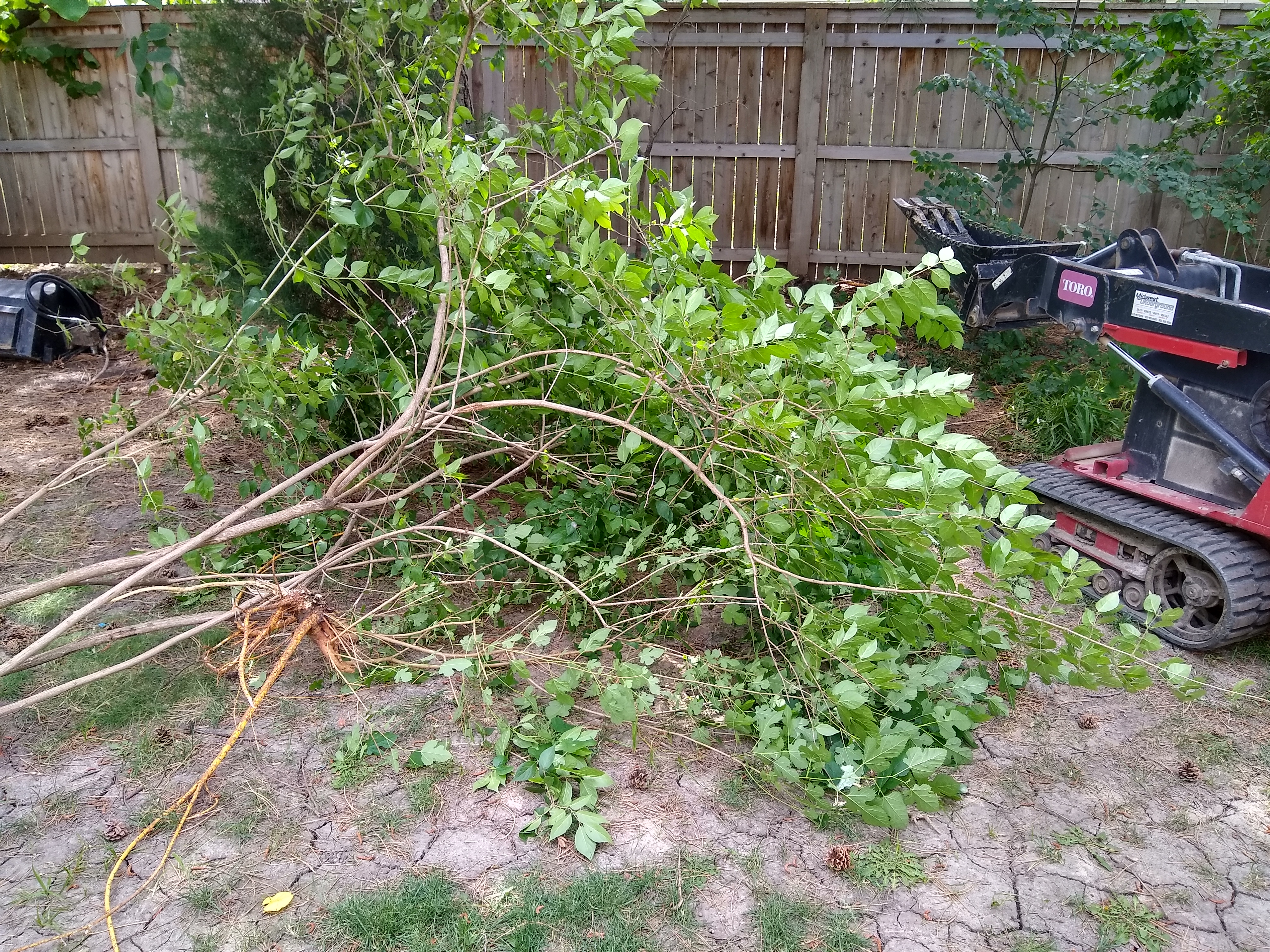
love using the stump bucket to remove invasive honeysuckle!

Another plant widely used for erosion control along highways and in agricultural grassed waterways was Reed Canary Grass.  It lays flat and conveys water quickly, however it is hard to manage and no longer recommended by conservation agencies.  Lying flat under the snow it provides little winter wildlife cover and forms dense stands that reduce biodiversity.


Japanese Barberry is another invasive species widely used as an ornamental.  Tough as nails, but even sharper, these "bullet-proof plants" are often seen in new construction with Spirea and Boxwoods.  Like the Honeysuckle, Barberry lifecycle allows it to leaf out in the Spring earlier than native plants shading them out.  The small berries can be eaten by birds which spreads their seed.  They can also spread by rhizomes and their roots can interfere with the growth of other plants.

Barberry is a nasty one, with painful and irritating thorns

Barberry at Browns Woods in West Des Moines


One of the most beautiful, and highly invasive, ornamental shrubs is Burning Bush or Winged Euonymus.  I love the color, and we had a nice row along our home when we moved in.

Brilliant, but Invasive, Burning Bush

Easily propagated, hardy and beautiful, it is a staple of the landscaping industry.  I eventually removed ours with machinery, but seedlings and remaining roots continued to resprout for some time.  This makes established colonies of exotic burning bush very hard to eradicate. The photos below were also taken in the Fall at Browns Woods. You can notice many of the surrounding plants are dormant, while the burning bush is just starting to change color and drop its leaves (giving it a life cycle advantage).


A US Native Burning Bush, the Eastern Wahoo, is unfortunately lesser known so most nurseries and greenhouses only carry the exotic variety.


Here's a recent episode of the Small Farm Sustainability Podcast from Iowa State University


Here is even more information on Invasive Species from ISU Extension and Outreach


We also found some bittersweet on our walk in the woods...


Use of invasive species in landscaping contributes to their spread into natural areas. Avoiding these species is the first step to help control their invasion.  When it comes to invasive species, the old adage is right...

An ounce of prevention is worth a pound of cure!


That's a pile! Invasive Honeysuckle