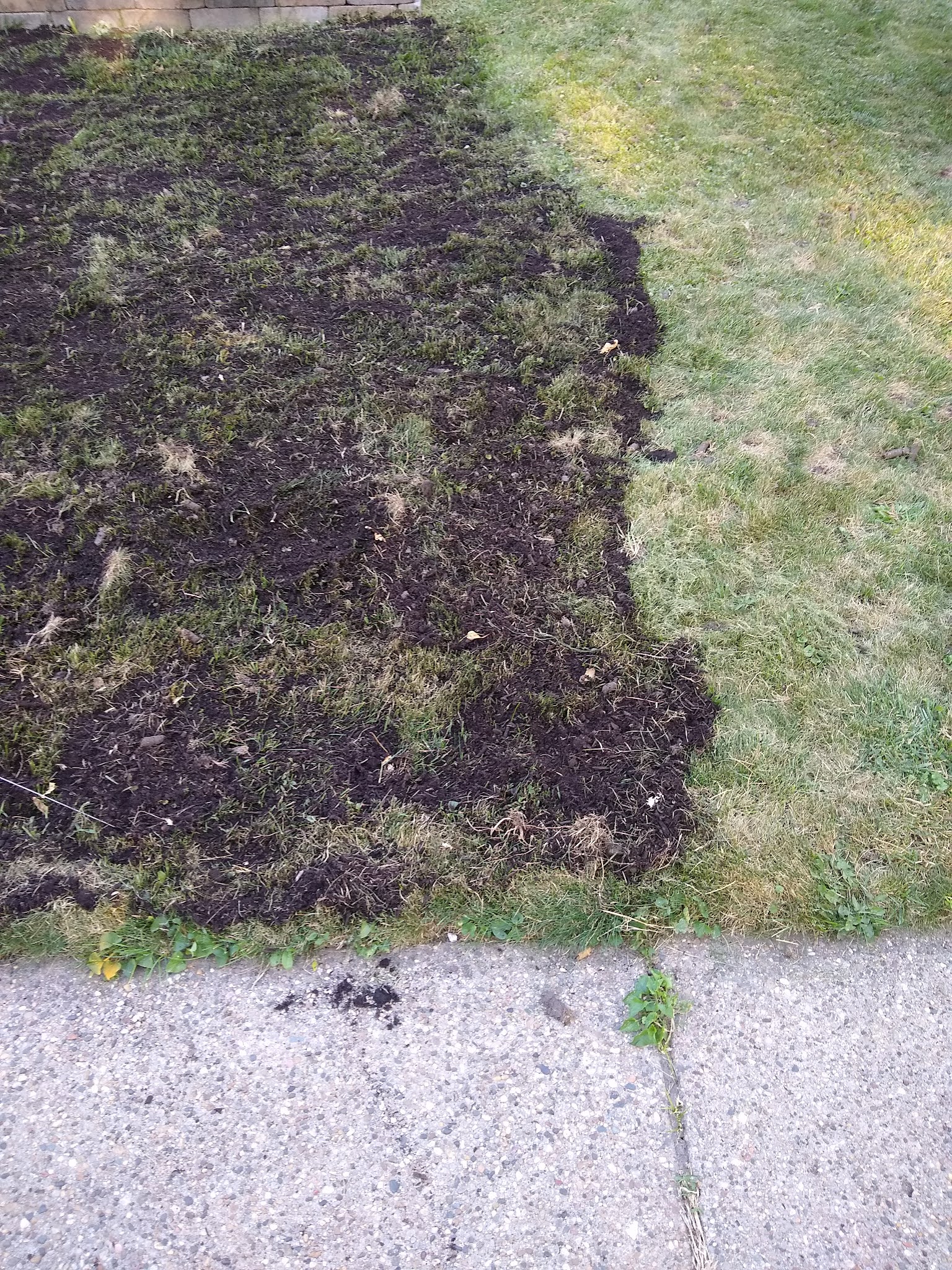
Even though Abundant Design takes out way more turfgrass than we put in, a lush piece of lawn is nice for many reasons.
A lush green yard has some traditional appeal and is a resilient ground cover for sunny play areas. It can indicate outdoor 'rooms' or transition zones from one area to another. It can make a traffic resistant path through more open food forests. Turf roots can hold soil in place on sloped yards if it can get established and water flow is not concentrated. Lawn and turfgrass is often required for at least a percentage of the front yard in many residential neighborhoods, whether through an HOA or city zoning ordinance.
So how do we keep lawns healthy, for the grass, but also for our pets, environment and ourselves?
I have the pleasure of knowing Jennifer Miller and Cody Killgore of
Clarion Sage Farm in Waukee. If you have ever been to one of our Seed Exchanges there is a good chance you've met them. Cody had previously worked in the turf care industry for 13 years and has some suggestions which make up a great portion of this article.
"Here is what I recommend: If you want what most people call a lawn, or cultured turf, in the midwest, grow one that is primarily turf type tall fescue, not bluegrass. Problem is, almost all homes are started with bluegrass turf, or have been cultured to it by prior owners. To convert it quickly you have to grind it up with a verticutter and reseed it with TTTF. Option two is to aerate the lawn heavily and then overseed it with TTTF, every spring and fall . Over a couple of years it will convert, or at least it will be more TTTF than bluegrass.
TTTF is more drought resistant and will hold it's color better in the summer and with less water. It is also better under foot traffic, aka kids playing on the lawn."
We've seen before how shallow Bluegrass roots are, especially when comparing it to native plants.
Whether or not you do the grass type conversion or not, Kilgore has other suggestions and tips-
1. Never take your mower off the highest setting Tall turf shades the soil and inhibits weed germination, and preserves soil moisture. Turf that is 3" or taller is better, and a lot of mowers don't even get to that on their highest setting.
MYTH: "If I mow short, it will be longer until I have to mow again."
2. Fall aeration and overseeding Take whatever money you are spending on fertilizer and weed control and spend that instead on seeding, overseeding, or aerating every fall, and on watering if you must. The best kept secret to weed control is that weeds don't invade thick turf. Spend any money you were planning to, or have, on keeping the turf thick instead. Annual fall aeration and overseeding is the best.
Learn more about Soil Quality Restoration which adds compost in the mix
3. Cut regularly Never let your grass grow tall enough that you are cutting more than 1/3 of the height. When that happens it stresses the plant and actually pulls on the root systems of the plant, which is bad.
Maybe now is the time to consider a Robotic Auto Mower?
4. Keep your mower blade sharp Sharpen it once a year in the spring. A dull blade shreds the top of the leaf blade and that injury is where disease most often enters the plant.
5. Water wisely If you don't want summer color or the watering expense, let your lawn go dormant in the summer. Watering too little does more harm than good. It will come back with the fall rains and cooler temps. But once you see it start to turn straw colored, just let it be.
If you do choose to water your lawn, water it in the early morning hours, like before 7am. This gives it time to soak into the soil instead of evaporating off the grass. Use a sprinkler that disperses large droplets. Large droplets are more apt to fall into the soil line and will not evaporate as much during delivery. Do not water at night, or right before dark. It's the fastest way to promote disease. Also, water deeply instead of often. When I kept a lawn I would water each area for an hour and a half once a week in the spring, and once every four days in the summer. This will put water deeper in the soil. It will be less apt to evaporate off the soil line, leach deeper into the soil, and that promotes deeper root development, which also helps promote thicker turf.
 |
| https://midwestgrowsgreen.org/ |
"Even though I was managing a large lawn care business at the time, I stopped applying herbicides, fungicides, or insecticides on my lawn. I put all my efforts into keeping it thick, and that, along with the practices I offered above kept it in deep color and good health. The neighbors couldn't even come close to competing with me, which meant I was the King of the Typical Suburban Male Neighborhood." says Cody.
Using these tips, maybe you can be the "Lawn King of the Neighborhood" and then share your tips and tricks to help grow a greener lawn naturally with your neighbors.
The infographic to the right highlights some of the negative health effects of pesticide use. You can learn more at
midwestgrowsgreen.org
You can also read about a more natural, gentler homebrew weed killer that I use at our house here -
Have a great Fall!