Our Mission:

Our Mission: To enable individuals and communities to take an active part in the cultivation of systems that provide the highest quality fruits, vegetables, herbs and other yields, in a way that benefits themselves, cares for the land and environment, and provides a surplus to use, share and reinvest into the system.

Tuesday, August 28, 2018

End of Summer Offer, Tree+Planting!

Apple Trees planted for $49+tax!
Pears, peaches and more too!
#3 sized pots or similar sized grow bags, ~4-6'+ tall
-Cortland, Gala, UltraMac (~improved Macintosh) Golden Delicious, GoldRush, JonaFree, Pristine, Antonovka, Empire, Zestar (more?) Apples 
-Bartlett, Starking Delicious and Honeysweet Pears
-FlamePrince, Golden Jubilee and Reliance Peaches
-ask about cherries, blueberries, elderberry and more! 

Make it a micro guild with chives, white clover and an Ozark Beauty strawberry for 
Only $15 more!


Of course we can do a larger planting for a backyard mini-orchard or full scale food forest as well, with many ecological services provided by customized companion plantings! 

Fall is a great time to plant potted trees. Soil temps are still warm enough for root growth yet days are cool enough for less stress.

Offer valid in the Des Moines metro area, from now through September 2018, or while supplies last, get on the schedule today!

Sunday, August 26, 2018

A Good Year for Pollinators!

This year has been a great year for pollinators!

At least from what we've seen in our yard, and on projects, the numbers of Monarch butterflies are WAY up.  We've raised dozens of larvae and even observed visiting adults lay eggs.

Six larvae (do you see them all?) can make short work of smaller plants.  I even relocated two or three to a larger common milkweed growing nearby.

Some neighborhoods maybe have more adults than milkweed to lay eggs on.  I was building a rain garden and within minutes after planting, a new swamp milkweed plant had its first egg laid on it!

This Monarch Momma laid an egg on a Swamp Milkweed minutes after I planted it!

I haven't noticed as many honeybees this year (still some), but the clover in our lawn was stunted by dry conditions.  Very thankful for the rains this last week!

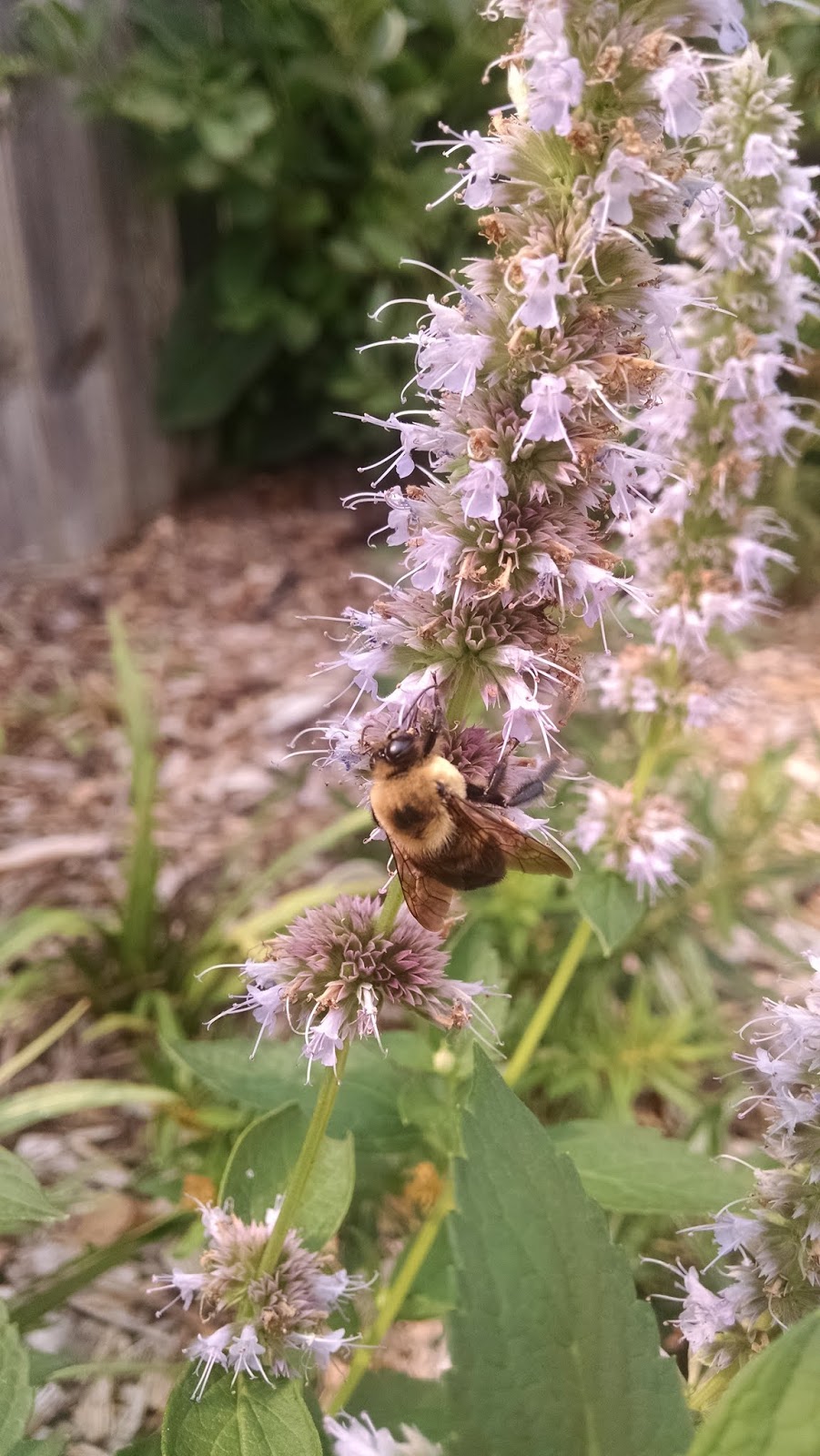
Native bees abound however!


Bumblebees foraging on borage flowers in the strawberry patch

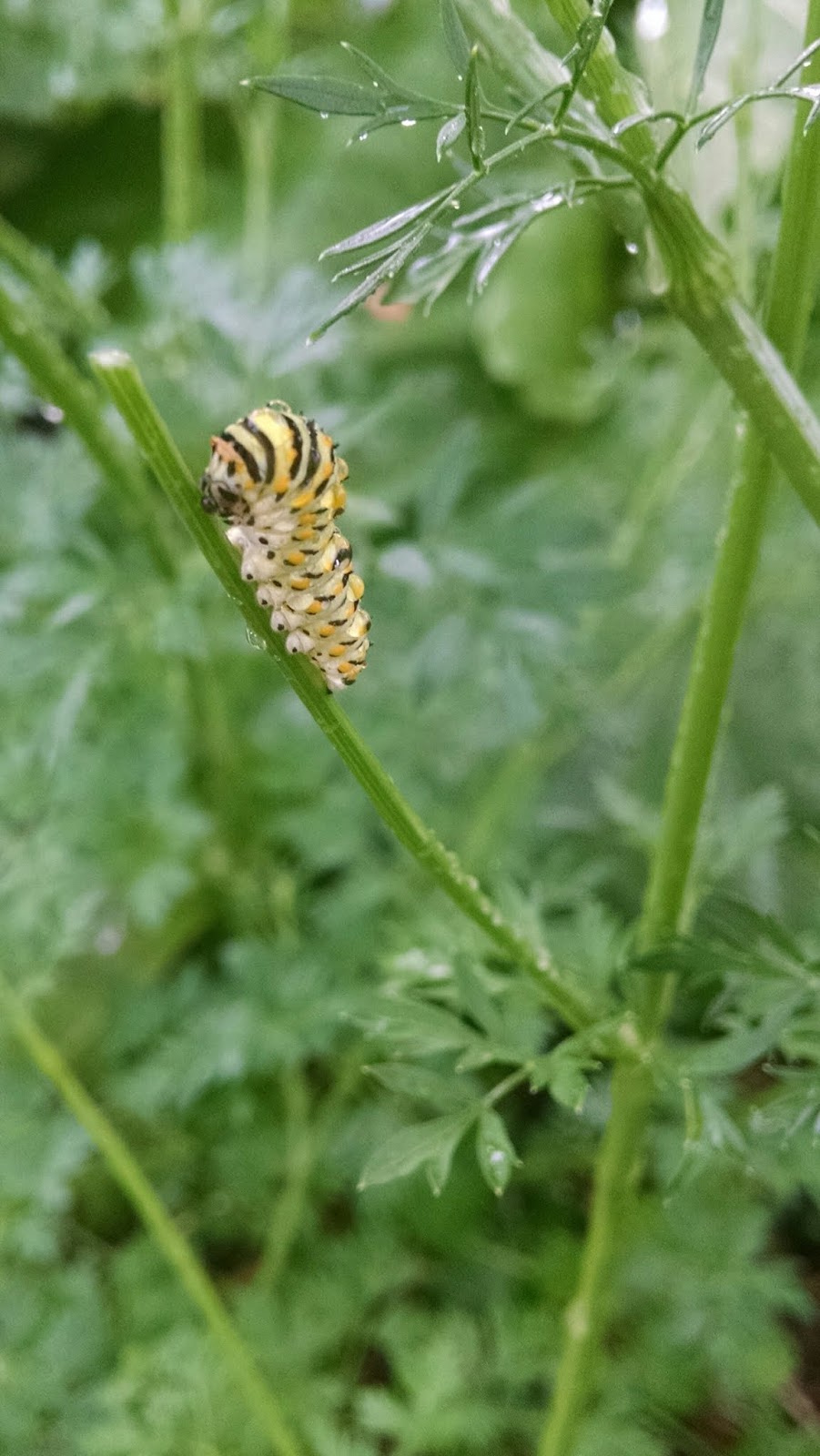
Along with Monarchs, we've raised a good number of black swallowtail too. We leave an area in parsley and dill mostly just for them.


This butterfly was evidently pretty thirsty as it stopped for a salty drink while I built these raised garden beds.


I've seen more hummingbirds than I ever have in the backyard.  I have more columbines, woodland phlox and cardinal flowers now, one of their favorites, which probably has a part to play.

And although not pollinators the goldfinches are numerous and feasting on purple coneflower seedheads, and a Cooper's hawk flew through looking for a meal on the wing this morning; a probable indicator of a ecologically healthy yard.

I hope you are enjoying more and more butterflies, as well as other pollinators, and as always if you need help providing habitat give us a call!  We love to design and install designated habitat, or many other features like rain gardens and more include beneficial plants and habitat for pollinators!

You can also learn more by browsing Abundant Design's blog  Search: Pollinator


And your local Menards might still have these bee houses available on Clearance-


Have a great week!

Saturday, August 18, 2018

Caring for Newly Grafted Trees

Wow!
It has been a busy summer so far.  Lots of great projects going on!

Here is a follow-up video to the Grafting Tool Review and the Grafting Class with Nine Square Feet earlier this year.  It highlights new graft care and what you might have seen with your grafts.


Some of the scion we had was kind of small and maybe dried out a bit, some might have not lined up quite how it needed to be, or maybe yours were physically damaged afterwards like some of mine. 

Hopefully you had a decent success rate, mine was around 50% I'd guess.  Ask any questions in the Comments here or on the Facebook post.

I am really glad some of the rarer varieties I tried have worked out though!

Saturday, June 9, 2018

New Strawberries, a How-To Growing Guide

I'm very happy to say that Abundant Design has put in hundreds of strawberries this year.

To help get everyone of to the best start, here is a quick growing guide for our new growers and for anyone growing strawberries. Enjoy!


June-Bearing Strawberries (like Jewel and Cavendish)

This first year pinch off all the flower buds in the first year so plants can put more energy into growth, and more fruit the following years. It also encourages runner production and helps winter survival. You can let a couple runners root on each side to help fill in the rows. Space the plantlets out evenly and make sure to get good soil contact around their roots. Cut off any extra runners this season to avoid over-crowding, smaller berries and disease.

After the first year June-bearing strawberry beds do best with an annual "renovation" immediately after harvest. It helps keep your plants healthy and productive. 
Do not renovate the first year.
  • As soon as all the berries have been picked, clip off the leaves to about 3” tall.  You can use your lawn mower set at the highest setting and collect the clippings or rake them off to help reduce disease. Take care not to cut or injure the crowns!
  • Narrow the beds by removing plants that have spread beyond the desired width.
  • Reduce crowding within the beds by removing some plants. Try to retain strong runner plants with 3-5" spacing, and remove "mother" plants after 3-4 years.
  • Complete the renovation process with a good watering and a little compost to get new growth off to a good start.

Everbearing/Day-Neutral Strawberries (like San Andreas or Ozark Beauty)

Just like the June-bearing varieties, pinch off all the flowers for 3 or 4 weeks after planting. Also remove all the runners during the first year. This will allow the plants to become healthy and well established. You can let the plants develop fruit midsummer through October.

You do not need to renovate everbearing strawberries.  I use the everbearing kinds throughout many fruit guilds and food forests, letting them run free as a ground cover and foragers treat.  The shade most likely does lower overall fruit production, but can also help promote season long fruiting.  Everbearing varieties will produce less with the hot weather of summer, but produce again once the cooler fall temperatures return.

Weed Control & Mulching
Remove any weeds once a week throughout the growing season. Catch weeds when they are small so they do not have a chance to compete with your strawberries. A scuffle hoe works well for this, but be careful not to damage the shallow roots and crowns. Avoid covering crowns with soil while you work.

Proper mulching is a powerful tool, helping with weed control, keeping fruit clean, conserving moisture, and adding humus to the soil.  Mulch with 4" of a loose, weed and seed free material such as straw.


Pest Control
A net or other covering can keep birds from snatching up your ripe berries. Copper wire or aluminum foil pressed around the top of wooden bed edges and beer traps can foil slugs (see what I did there?)

A resident wren will also eat slugs and many other pests!

I've had whiteflies before but they went away and I don't know what I did that helped.  You can use a mixture of dishsoap and water which smothers many insects.

Irrigation
Maintain good moisture throughout the season, ideally 1”-2” of rain each week, or supplemented with watering.  Try not to water them when the sun is hitting them directly.  I like to water ours in the morning before work, but if needed a late afternoon/early evening is fine if there is enough time to dry a bit before dark. Strawberries do poorly under drought conditions.

Preparing for Winter
Mulching is necessary in Iowa for winter protection of the crowns. Repeated freeze/thaws can kill strawberry plants, but mulch moderates temperature shifts. After plants have started to go dormant apply several inches of mulch cover.  I usually use shredded leaves but straw is a better choice if you can find it. Remove the mulch in early spring before or right when new growth appears. You should recover the plants again if cold temperatures return.

If you bought crowns and haven't planted, or thinking of getting some strawberries
Select a site with good water-holding capacity, but avoid wet soils. I like to plant them on the top of  rain garden or contour swale berms.  Plant as soon as possible in the spring, after the soil has warmed. Planting at the correct depth is very important.
  • Dig a hole deeply enough that you are able to lower the plant into the ground without bending the roots. 
  • Make certain that the plants are set with the middle of the crown level with the top of the soil. Do not to cover the crown. 
  • Press the soil firmly around the roots, but do not pack it hard. 
  • After about a week check the soil level for any settling. 

Enjoy the coming summer!

Saturday, May 12, 2018

Public Gardens & Mothers Day Weekend featuring Reiman Gardens


Friday I took the afternoon off to celebrate my birthday with family and visit Reiman Gardens for National Public Gardens Day.  It started in 2009 to raise awareness of public gardens and the role they play in our communities. This annual celebration takes place on the Friday preceding Mother’s Day each year.

Reiman Gardens has over 50,000 tulips, and almost at the end of their season they were still very much in bloom!


The apple trees were also blooming on the apple arbor, similar to an espalier, in their "Home Production Garden" space.


There are many other areas to explore around the grounds, including a Children's Garden, Rose Garden, Conservatory and Butterfly House.

In honor of Mother’s Day, all moms are admitted to


Happy Mother's Day from Abundant Design!